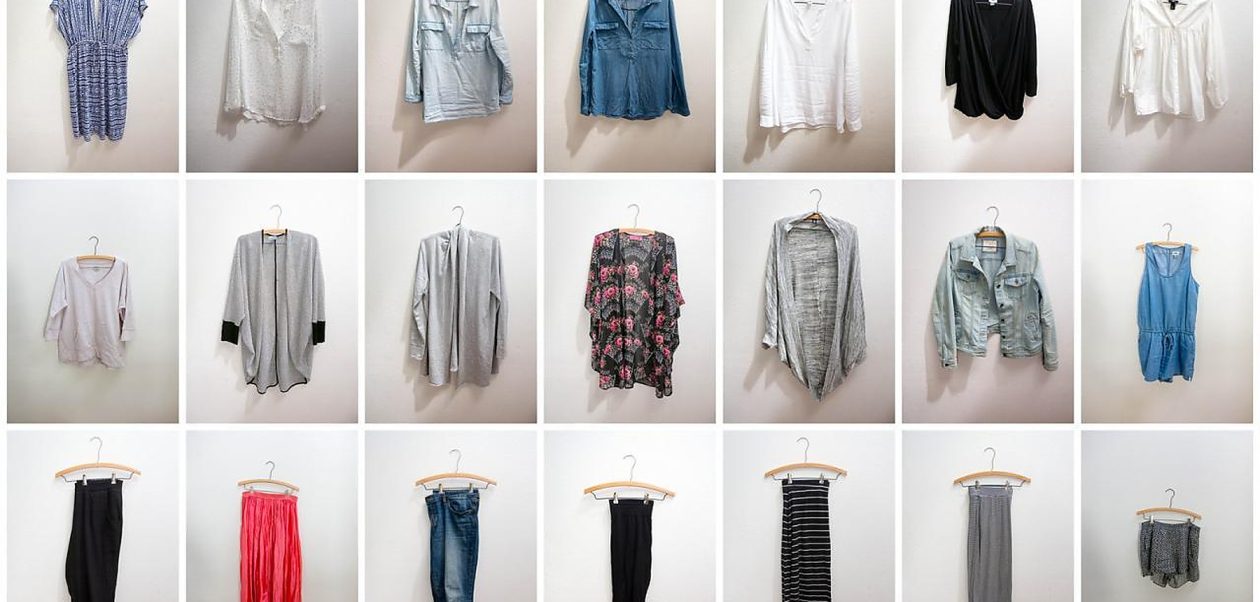
You open your closet. Full of clothes. Nothing to wear. You buy another shirt. The cycle repeats.
This is the problem a minimalist fashion template solves. It’s not about owning less for the sake of it. It’s about owning the right pieces so every combination works. No more staring at a rack of options that somehow produce zero outfits.
I’ve tested this system for three years. It cuts my morning decision time to under two minutes. My clothing budget dropped by 60%. And I get more compliments now than when I owned three times as much.
Here is the exact template. No fluff.
What Actually Goes Into a Minimalist Wardrobe Template
Most capsule wardrobe advice tells you to pick 37 items. But it never explains why 37, or what those items should be. That’s useless.
The core principle is simple: every piece must pair with at least three others. If a shirt only works with one pair of pants, it’s out. This rule alone eliminates 80% of bad purchases.
Here is the breakdown for a standard minimalist template. These numbers work for most climates and lifestyles. Adjust based on your job and local weather.
| Category | Number of Items | Key Criteria |
|---|---|---|
| Tops (short + long sleeve) | 6 | Neutral colors only. No logos. Cotton or linen. |
| Bottoms (pants + shorts) | 4 | Two jeans, one chino, one tailored trouser. |
| Outerwear | 3 | One casual jacket, one blazer, one rain coat. |
| Shoes | 4 | One sneaker, one loafer, one boot, one dress shoe. |
| Layering pieces | 3 | Sweater, cardigan, hoodie. |
| Accessories | 3 | Belt, watch, one bag. |
Total: 23 items. That’s it. Fewer than most people own in t-shirts alone. But this 23-piece set produces over 200 unique outfits.
The math works because every top pairs with every bottom. Every shoe works with multiple bottoms. Every outer layer fits over every top. That’s the multiplier effect.
The 3 Color Rules That Make Mixing Effortless
Color is where most people fail. They buy a bright red shirt because they like it, then realize it only matches one pair of jeans. Now that shirt is a liability.
Here are the rules that guarantee everything matches everything.
Rule 1: Pick a Base Neutrals Palette
Your base colors should be black, navy, charcoal, and olive. These four colors cover 90% of your wardrobe. Every top and bottom should be one of these four. No exceptions.
Uniqlo sells excellent base pieces. Their Supima Cotton T-shirts ($19.90) come in black, navy, and gray. Their AirSense wide pants ($49.90) in charcoal and olive. Buy those. Done.
Rule 2: Add Exactly One Accent Color
Pick one accent color. Just one. Dark burgundy, forest green, or tan. This accent appears in your outerwear, shoes, or accessories only. Never in a top or bottom.
For example, a Patagonia Better Sweater ($139) in dark burgundy works as an accent layer over any neutral top. It adds visual interest without breaking the system.
Rule 3: Denim Is Its Own Category
Jeans count as a neutral, but treat them as a separate color block. Stick to one denim wash. Raw indigo or medium blue. Not both. Levi’s 501 ($98) in rigid indigo is the gold standard.
If you have two different washes, they won’t match the same tops equally. One wash keeps every combination consistent.
How to Build Your Template in One Afternoon
You don’t need to buy everything at once. But you need a plan. Here is the exact process.
- Empty your closet. Everything on the bed. No cheating.
- Sort into three piles: Keep, Maybe, Trash. The Keep pile only gets items that fit the 3-pair rule and the color rules above.
- Count your keepers. You likely have 5-10 usable items. That’s normal.
- List your gaps. Using the table above, write down exactly what you’re missing. Example: “Need one navy chino, one white Oxford shirt, one pair of brown loafers.”
- Buy the gaps. One category per week. Start with tops and bottoms since they do the most work.
Everlane is a reliable source for basics. Their Organic Cotton Crew ($38) and Day Glove ($68) are staple pieces that last. Muji also carries excellent plain tees and linen shirts that fit the neutral palette.
Don’t rush. A minimalist wardrobe built in a weekend of panic buying will fail. Take four weeks. Buy quality. Wait for sales if needed.
The 3 Biggest Mistakes People Make
I’ve seen these failures over and over. Avoid them and you skip the most painful part of the learning curve.
Mistake 1: Buying “Minimalist” Brands That Don’t Last
Some brands charge premium prices for cheap construction. A $120 t-shirt that pills after three washes is not minimalist. It’s wasteful. You’ll replace it, defeating the purpose.
Check the fabric composition. Anything under 180 GSM for a t-shirt is too thin. Look for 200 GSM or higher. Uniqlo’s Supima Cotton is 200 GSM. Everlane’s Heavyweight Tee is 220 GSM. Those last.
Mistake 2: Ignoring Your Actual Lifestyle
A minimalist template for an office worker is different from one for a remote freelancer. If you work from home, you don’t need four dress shirts. You need comfortable but presentable layers.
Be honest about your week. If you wear jeans and a sweater 6 days out of 7, build your template around that. Not around the fantasy version of yourself who goes to cocktail parties every Friday.
Mistake 3: Buying Everything in Black
All-black wardrobes look great on Pinterest. In real life, they look like a uniform. And black fades unevenly. After six months, your “all black” pieces are actually four different shades of gray. They stop matching.
Mix in navy, charcoal, and olive. These colors fade gracefully. They still look intentional when they age.
When This Template Does Not Work
This template is not for everyone. If you fall into any of these categories, adapt it heavily or skip it.
- You live in a four-season climate with extreme temperatures. You need more outerwear and layering pieces. Increase the outerwear count to 5 and add thermal base layers.
- You have a uniform or dress code at work. Your work clothes are separate. Build a separate 10-piece work capsule. Don’t try to merge them.
- Fashion is a hobby you genuinely enjoy. If you love experimenting with trends and colors, this system will feel restrictive. It’s designed for people who see clothes as utility, not self-expression.
- You are still figuring out your personal style. Don’t lock yourself into a rigid template yet. Experiment for 6-12 months. Then use the template to organize what you’ve discovered.
The alternative to this template is a curated seasonal rotation. Buy 10 pieces per season, store the rest. That works for people who want variety without accumulation. But it requires more storage and more mental energy.
How to Maintain Your Minimalist Wardrobe Long-Term
Building the template is the easy part. Keeping it clean is the real challenge.
One-in, one-out rule. Every time you buy something new, donate or sell something old. This keeps your count stable. If you buy a new pair of boots, one pair of shoes leaves. No exceptions.
Seasonal audits. Twice a year, pull everything out. Check for damage, fit changes, or pieces you haven’t worn in three months. If you haven’t worn it, it’s gone. Don’t rationalize.
Care for what you own. A $100 shirt that lasts 100 wears costs $1 per wear. A $40 shirt that lasts 10 wears costs $4 per wear. Wash on cold. Hang dry. Use a fabric shaver to remove pilling. Your Muji linen shirts will last five years if you treat them right.
Most people fail at minimalism because they treat it as a one-time purge. It’s not. It’s a maintenance habit. The first six months are hardest. After that, it becomes automatic.
A Real Template You Can Copy Right Now
Here is a complete 23-item template that works for a man or woman in a temperate climate with a casual office. Adjust the fit and silhouette to your preference. The colors and categories stay the same.
Tops (6)
- Black crewneck tee — Uniqlo Supima Cotton ($19.90)
- Navy crewneck tee — Everlane Organic Cotton ($38)
- White Oxford button-down — Everlane Oxford ($68)
- Charcoal long-sleeve henley — Uniqlo ($29.90)
- Olive linen button-down — Muji ($49)
- Black turtleneck — Uniqlo Merino ($39.90)
Bottoms (4)
- Raw indigo jeans — Levi’s 501 ($98)
- Black jeans — Uniqlo Selvedge ($49.90)
- Navy chinos — Everlane Chino ($68)
- Charcoal tailored trousers — Uniqlo AirSense ($49.90)
Outerwear (3)
- Olive field jacket — Patagonia ($199)
- Navy blazer — Uniqlo ($79.90)
- Black rain coat — Everlane ($128)
Shoes (4)
- White leather sneakers — Veja Campo ($155)
- Brown suede loafers — G.H. Bass ($110)
- Black combat boots — Dr. Martens 1460 ($170)
- Black leather derbies — Meermin ($215)
Layering (3)
- Gray merino sweater — Uniqlo ($49.90)
- Navy cardigan — Everlane ($88)
- Black hoodie — Reigning Champ ($145)
Accessories (3)
- Black leather belt — Orion ($65)
- Silver field watch — Timex Expedition ($55)
- Black canvas backpack — Fjällräven Kånken ($80)
Total cost: approximately $1,700. Spread over four weeks, that’s $425 per week. Or buy over two months for $212 per week. This wardrobe will last 3-5 years with proper care. Cost per wear: around $0.30.
You can build this with cheaper alternatives from Target or H&M. But the quality won’t hold. The template is the structure. The brand choices are just recommendations.
Back to that closet you started with. Full of clothes, nothing to wear. After this template, you open the door. 23 pieces. Every combination works. You grab a navy tee, raw jeans, white sneakers. Out the door in 90 seconds. No decisions. No regret.
That’s the whole point.