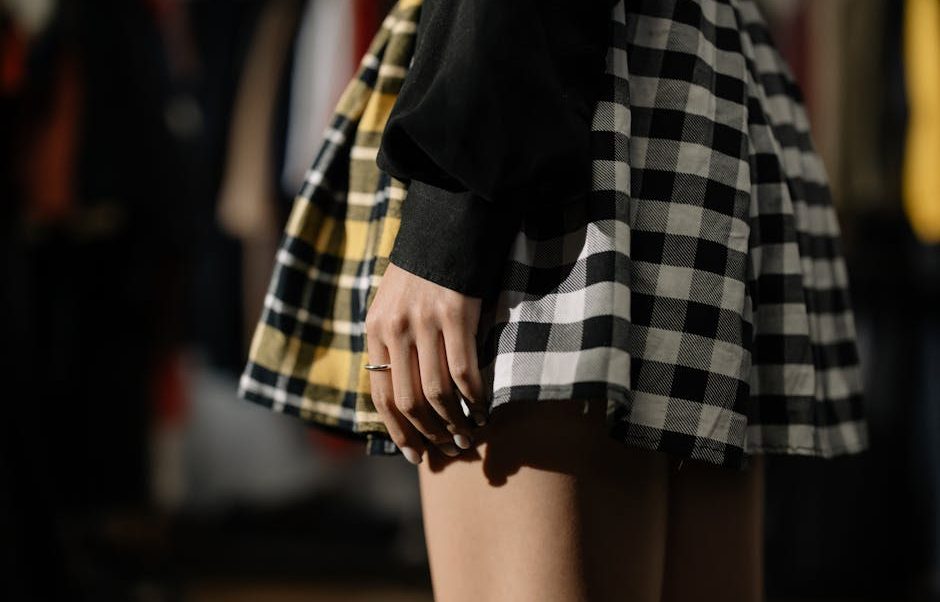
Most sewing blogs are written by people who have been sewing for thirty years and have completely forgotten what it feels like to have a mental breakdown over a bobbin. They tell you to start with a circle skirt because it’s ‘just a circle with a hole in it.’ They are lying to you. A circle skirt involves cutting on the bias, which means your fabric will stretch out of shape if you even look at it funny, and hemming it is like trying to give a haircut to a toddler who just discovered sugar. It’s a nightmare. I’ve been sewing for five years now—not a pro, just someone who wants clothes that don’t look ‘homemade’ in the bad way—and I’ve wasted probably $300 on fabric for patterns that were supposedly for beginners but ended up in the trash.
The elastic waistband trap
I used to think elastic was the holy grail. No zippers! No buttons! Just a tube of fabric and a safety pin! I was completely wrong. What I mean is—actually, let me put it differently. The technique is easy, but the result usually looks like a potato sack. If you use a fabric that’s even slightly too stiff, like a heavy quilting cotton, the bunching at the waist makes you look four sizes larger than you are. I made four of these before I realized I only ever wore them to garden in because I felt like a frump in public.
I tracked my sewing time for three different ‘easy’ styles last summer. A basic elastic-waist rectangle skirt took me 2 hours and 15 minutes. A structured A-line with a side zipper took 5 hours. But here is the thing: I’ve worn the zipper skirt 40 times and the elastic one zero. The math doesn’t lie. Effort correlates to actually wanting to leave the house.
If the pattern says ‘one size fits most’ or relies entirely on a piece of 1-inch elastic to give it shape, run away. You deserve a garment with an actual silhouette.
The ‘Toddler Instruction’ problem
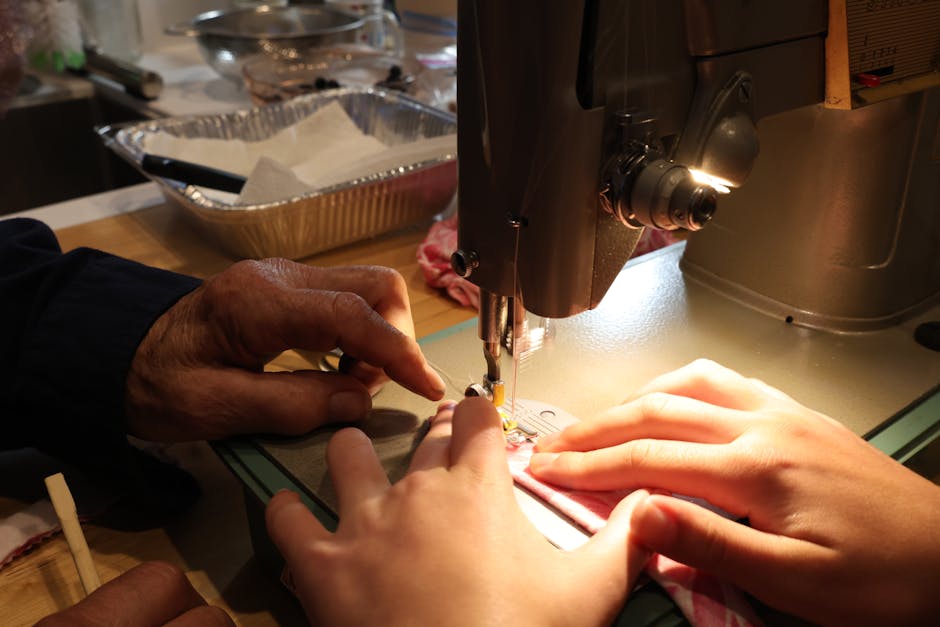
I’m going to be unfair for a second. I know everyone loves Tilly and the Buttons. They are the darlings of the indie sewing world. But I can’t stand them. The instructions feel like they’re talking to a toddler. I find the ‘Top Tip!’ bubbles and the overly cheery tone incredibly grating when I’m trying to figure out why my thread is bunching up in the bobbin case. I’d honestly rather struggle through a vintage Simplicity pattern from 1974 with three tiny diagrams than read another paragraph that treats me like I’ve never seen a pair of scissors before. It’s patronizing.
Anyway, my point is that ‘beginner-friendly’ shouldn’t mean ‘infantilizing.’ It should mean the drafting is solid and the seams are straight. Anyway, I digress. Let’s talk about what actually works.
The only three patterns worth your time
If you are actually starting out, skip the Big 4 (Simplicity, McCall’s, etc.) because their sizing is insane. According to them, I’m a size 22, but in the real world, I’m a 14. It’s a blow to the ego you don’t need on a Saturday morning. Instead, look at these:
- The Peppermint Magazine Pocket Skirt: It’s free (or pay-what-you-want). It has massive pockets. It uses a flat-front waistband with elastic in the back, so you get the comfort without the ‘potato sack’ front. I’ve made three. One in a $22/yard Robert Kaufman Essex Linen that feels like a dream.
- The Rae Skirt by Made by Rae: This is the gold standard. The instructions are clear without being annoying. It’s an A-line that actually fits around the hips.
- Grainline Studio Reed Skirt: I might be wrong about this being for absolute beginners because it has a few more pieces, but the fit is superior. It’s a real garment.
I refuse to use any PDF pattern that doesn’t have layers. If I have to look at a mess of five different dashed lines and guess which one is my size, I’ll delete the file and take the $15 loss. It’s 2024. Use layers or don’t sell the pattern. Total dealbreaker.
That time I ruined silk in Portland
It was July 2019. I was in a tiny Airbnb in Portland for a wedding, and I decided—in my infinite wisdom—to finish a silk-satin circle skirt the morning of the event. I hadn’t let the hem ‘hang’ for 24 hours like you’re supposed to. Silk is slippery. It’s like trying to sew a puddle. By the time I got to the wedding, the back of the skirt had stretched out and was three inches longer than the front. I looked like a bird with a broken tail. I spent the whole reception sitting down or hiding behind a tall plant. I felt like a failure. It took me six months to touch my sewing machine again after that. All because I picked a ‘simple’ pattern that was actually a trap for my skill level at the time.
I’ve spent exactly $412 on patterns in the last three years. I only use four of them. That’s a terrible ROI, but that’s the hobby, I guess. You pay for the lessons in blood, sweat, and wasted yardage.
Don’t buy the cheap polyester stuff from the big box stores either. It feels like a cheap hotel bedsheet and it’ll melt under your iron. Get a decent linen blend. It hides your mistakes. It’s forgiving. It smells like a library when you steam it.
Is it weird that I find the smell of hot linen therapeutic? Maybe. But at least I’m not wearing a circle skirt that makes me look like a lopsided umbrella. Just buy the Peppermint pattern and start there. It’s the only one that won’t make you want to throw your machine out the window.
Do you actually enjoy the process of hemming, or are we all just pretending for the sake of the ‘slow fashion’ aesthetic?