Most women own a blazer they never wear. It hangs in the closet looking sharp, but the second you put it on, your shoulders feel like they’re in a vice and your elbows can’t reach a coffee cup without the fabric straining. That’s the problem with traditional tailored blazers—they’re built for mannequins, not for sitting at a desk for eight hours or sprinting to catch a train.
The good news: fabric technology has changed. Stretch fibers, knit constructions, and softer shoulder pads have turned blazers from stiff armor into something you actually forget you’re wearing. Two brands dominate this shift: Uniqlo and J.Crew. Both sell blazers under $200. Both claim comfort. But they’re not the same product at all.
Here’s the honest breakdown after six months of wearing both.
The Real Problem: Why Most Blazers Feel Terrible
Tailored blazers have a structural problem. The classic construction—fused canvas, rigid shoulder pads, polyester lining—was designed for formal occasions where you stand still and look important. It was never meant for movement.
When you sit at a desk and type, your shoulders roll forward. A stiff blazer fights that movement. The armholes pull. The back wrinkles. The collar digs into your neck. By 2 p.m., you’ve either taken it off or you’re miserable.
What changed in the last five years is material science. Brands started blending elastane (spandex) into wool and polyester weaves. Even 2-4% elastane transforms how a blazer moves. Add a knit construction instead of woven fabric, and you get something that behaves more like a cardigan but looks like a blazer.
Uniqlo leaned hard into this. J.Crew took a different path—they kept the tailored look but softened the internals. Both approaches work. They just work for different people.
Comparison Table: Uniqlo vs. J.Crew Comfort Blazers 2026

| Feature | Uniqlo Stretch Blazer | J.Crew Parke Blazer |
|---|---|---|
| Price (2026) | $59.90 | $158–$178 |
| Fabric | 68% polyester, 28% rayon, 4% elastane | 62% cotton, 33% viscose, 5% elastane |
| Construction | Knit, unstructured | Woven, lightly structured |
| Shoulder pads | None (minimal) | Thin, removable |
| Machine washable | Yes | No (dry clean recommended) |
| Size range | XXS–XXL | 00–24 (petite and tall available) |
| Best for | Travel, casual offices, all-day wear | Business meetings, polished look |
The price gap is real: you can buy nearly three Uniqlo blazers for the price of one J.Crew Parke. But the J.Crew blazer looks more expensive from across the room. That’s the tradeoff.
Uniqlo Stretch Blazer: The Sweatshirt in Disguise
Uniqlo’s comfort blazer is basically a sweatshirt that went to finishing school. The knit fabric has visible texture up close, but from three feet away it reads as a blazer. The 4% elastane gives it serious stretch—you can hug someone, reach a high shelf, or curl up in an airplane seat without any resistance.
What Actually Works
The armholes are cut lower and wider than a traditional blazer. That’s the secret. Most blazer discomfort comes from high, tight armholes that restrict shoulder movement. Uniqlo dropped the armhole slightly and widened the sleeve. Result: you can drive a car, type, and carry groceries without the jacket riding up.
The machine-washable factor matters more than people admit. Dry cleaning costs $8–$15 per visit. If you wear a blazer twice a week, that’s $80–$150 a year just in cleaning. The Uniqlo blazer goes in a cold wash, hangs to dry, and looks fine. That’s real money saved.
Where It Falls Short
The rayon content means it wrinkles. Not badly, but if you stuff it in a backpack for a day, you’ll see creases. It also pills slightly at the cuffs after about four months of heavy wear. And the drape is softer—it doesn’t hold a sharp lapel line the way a woven blazer does.
Verdict: Buy the Uniqlo Stretch Blazer if comfort is your absolute priority and you work in a casual or smart-casual office. At $59.90, it’s a low-risk experiment. But don’t expect it to replace a true tailored blazer for formal settings.
J.Crew Parke Blazer: The Polished Compromise
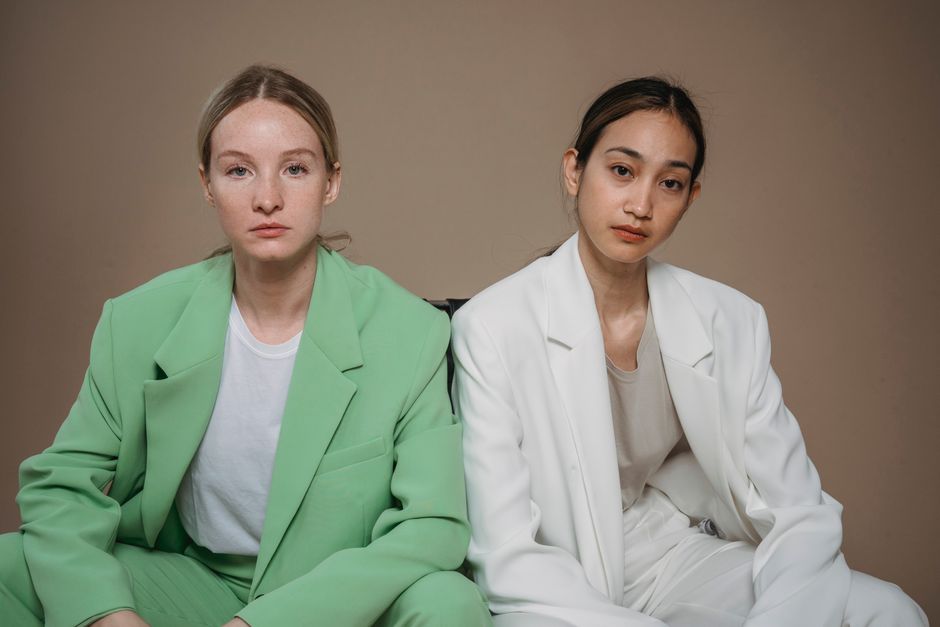
J.Crew’s Parke blazer (formerly called the Going-Out Blazer) is a different animal. It’s woven, not knit. It has a real lapel structure. But J.Crew removed the stiff inner canvas and replaced the shoulder pads with a thin, removable foam layer. The result: it looks like a traditional blazer but wears much lighter.
Why It Costs More
You’re paying for the cotton-viscose blend, which breathes better than polyester and has a matte finish that doesn’t look shiny in photos. The seams are finished with more care—no loose threads, no puckering at the lapel. The buttons are thicker and feel less plasticky. These details don’t affect comfort much, but they affect how the blazer reads in a meeting with your boss.
The Comfort Reality
Here’s the honest part: the J.Crew Parke is not as comfortable as the Uniqlo. It has 5% elastane, so it stretches, but the woven fabric still restricts movement more than a knit. The armholes are higher and more traditional. You’ll notice the difference when you reach across a table or put on a backpack.
But it’s dramatically more comfortable than a fully structured blazer from a decade ago. The removable shoulder pads help if you have narrow shoulders. The cotton blend doesn’t trap heat the way cheap polyester does.
Verdict: Buy the J.Crew Parke if you need a blazer that works for job interviews, client meetings, or any setting where looking polished matters more than feeling like you’re in pajamas. Wait for a 30% off sale—J.Crew runs them constantly, and $158 becomes $110.
When NOT to Buy Either
Neither blazer works for everyone. If you have very broad shoulders or a large bust, the Uniqlo knit blazer can pull at the buttons and lose its shape. The J.Crew Parke, even with stretch, runs narrow in the shoulders and upper back in straight sizes. J.Crew’s extended sizes (16–24) are cut differently, but the armholes still sit high.
If you need a blazer for a formal business environment—courtrooms, finance, law—neither of these will pass. They’re too soft. A structured wool blazer from Theory or Brooks Brothers is the right call there, even if it’s less comfortable.
And if you run hot, skip the Uniqlo polyester blend. It doesn’t breathe well in summer. The J.Crew cotton-viscose is better, but still not a linen blazer.
How to Pick the Right Size Without Trying On
Online sizing for blazers is a minefield. Here’s what worked for me and should work for you:
- Uniqlo: Size down one from your usual number. The knit fabric stretches, and the cut is intentionally relaxed. If you’re a medium in most brands, order a small. The XXL fits up to a 44-inch bust, but the knit drapes better with negative ease.
- J.Crew Parke: Order your true size, but check the shoulder measurement carefully. The Parke runs true to size in the body but slightly narrow in the shoulders. If you’re between sizes, size up and take in the waist—it’s a $25 alteration.
- Petite and tall: J.Crew wins here. Uniqlo doesn’t offer petite or tall blazer lengths, and the sleeves run long on shorter frames. J.Crew’s petite Parke shortens the sleeve and body by 1.5 inches, which saves you a tailoring bill.
Measure your shoulder-to-shoulder width before ordering. For both brands, the shoulder seam should sit within half an inch of your actual shoulder bone. Anything wider looks sloppy. Anything narrower pulls.
After Six Months: What Holds Up
I’ve worn both blazers weekly since October 2026. Here’s the wear report.
The Uniqlo blazer has pilled slightly at the cuffs and under the arms. The color (navy) has faded maybe 5%—barely noticeable. The stretch hasn’t sagged. After 20+ machine washes, it still looks presentable. For $59.90, that’s outstanding value.
The J.Crew Parke looks nearly new. The cotton blend has softened slightly, which actually improved the drape. No pilling. No fading. The buttons are still tight. But I’ve dry-cleaned it three times at $12 each, so the real cost is now $214. Still cheaper than a designer blazer, but the gap is closing.
If I had to pick one for a capsule wardrobe, I’d take the J.Crew Parke in black. It’s more versatile—dress it up with trousers, dress it down with jeans. The Uniqlo blazer is a workhorse, but it always looks slightly casual. That’s fine for my life, but might not be for yours.
The Bottom Line
Comfortable blazers aren’t a myth. They’re just built differently. Uniqlo wins on price and pure comfort. J.Crew wins on polish and longevity. The right choice depends on where you wear it and how much you care about the details.
The blazer category is moving toward knit construction and stretch fabrics across the board. In five years, the stiff, uncomfortable blazer will be a relic. For now, both Uniqlo and J.Crew are reasonable places to start—just know what you’re trading.