Only 18% of Americans wear a size 0–4. Yet for decades, most clothing brands designed for that sliver of the population. The disconnect is obvious once you see the numbers. Inclusive sizing isn’t a marketing move. It’s the difference between serving real people and ignoring them.
The Real Cost of Limited Sizing
When a brand stops at size 12 or 14, they send a clear message: you don’t belong here. That exclusion has a price tag attached.
Studies from the Journal of Fashion Marketing and Management show that 67% of women in the US wear a size 14 or larger. That’s roughly 100 million potential customers. Brands that cap their range at size 12 are leaving billions of dollars on the table.
Who Gets Left Out
It’s not just plus-size shoppers. Short women, tall women, women with athletic builds — anyone outside the “straight-size” model struggles. A 5’10” woman with a 36-inch inseam can’t buy pants off the rack at most retailers. A size 18 woman with a smaller bust can’t find a blazer that fits both her shoulders and her waist.
The Emotional Toll
Every failed shopping trip reinforces the idea that your body is wrong. That feeling has a name: size discrimination. It’s exhausting. And it’s completely unnecessary when brands choose to design for bodies that actually exist.
What Inclusive Sizing Actually Looks Like
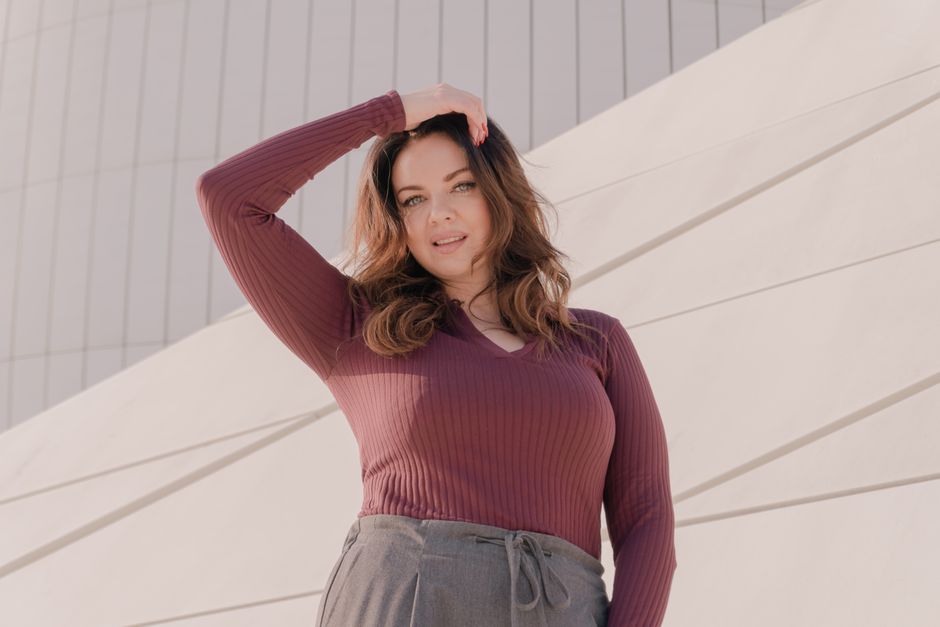
Real inclusive sizing means offering a continuous size range — typically XXS through 4X or 5X — with proportional grading at every step. It’s not about slapping a “plus” label on a standard pattern and calling it done.
Universal Standard set the benchmark. Their size range runs from 00 to 40. Every garment is graded with the same attention to fit across the entire spectrum. They also offer their Fit Liberty program: if your size changes within a year, they exchange the item for free.
Good American launched with sizes 00–24 and built their reputation on jeans that actually fit curvy thighs and smaller waists. Their sizing is consistent, not a gamble.
ASOS Curve offers sizes 14–28 with models photographed in each size. You can see how the garment drapes on different bodies before you buy. That alone saves hours of returns.
Here’s what separates real inclusive sizing from lip service:
| Brand | Size Range | Grading Method | Model Diversity |
|---|---|---|---|
| Universal Standard | 00–40 | Proportional per size | Multiple sizes shown |
| Good American | 00–24 | Curve-specific blocks | Size-inclusive photos |
| ASOS Curve | 14–28 | Plus-specific blocks | Model wears each size |
| Old Navy | 0–30 | Straight+Plus lines | Limited size variety |
Grading is the key word here. A size 20 isn’t a size 8 scaled up by 30%. It needs different proportions — wider shoulders, longer rise, different armhole depth. Brands that understand this earn loyalty.
Why Most Brands Still Fail at Inclusive Sizing
Here’s the uncomfortable truth: most brands don’t fail because they can’t. They fail because they won’t spend the money to do it right.
Developing a single pattern block costs roughly $500–$1,000. Grading that block into 15 sizes costs another $2,000–$3,000. Multiply that by dozens of styles per season, and the upfront cost hits six figures fast. Many brands decide the investment isn’t worth it for what they see as a “niche” customer.
That math is wrong. But it’s common.
The Vanity Sizing Trap
Some brands stretch their size labels to make customers feel smaller. A size 16 at one store fits like a size 20 at another. This isn’t inclusive sizing — it’s vanity sizing. It makes shopping confusing and returns skyrocket.
If you buy a size 18 at Target and a size 14 at H&M, neither brand is serving you well. You’re left guessing every time.
The “One Size Fits Most” Lie
Knitwear and stretchy dresses often get the “one size” treatment. That works for sizes 6–12 at best. Anyone outside that range gets a garment that’s either tent-like or strangling. One size fits none is more accurate.
How to Shop for Inclusive Brands That Actually Deliver
You don’t need to guess anymore. Here’s a system that works.
Step 1: Check the size chart before you click. Look for a brand that publishes garment measurements, not just body measurements. A 40-inch hip on the size chart means nothing if the actual dress has 36 inches of fabric at the hip.
Step 2: Look for model measurements. If a brand shows the model’s height, waist, hip, and the size she’s wearing, that’s a green flag. ASOS does this well. Universal Standard shows every size on a different model.
Step 3: Read reviews for fit details. Skip the 5-star reviews that just say “love it.” Look for reviews that mention your body type. “I’m 5’8″, 190 lbs, size 14, and the medium fits loose in the waist” — that’s gold.
Step 4: Buy from brands with free returns. Even the best size chart can’t predict how a specific fabric will drape on your body. Nordstrom and ASOS offer free returns. Universal Standard gives you a year to exchange if your size changes.
Step 5: Measure yourself every six months. Bodies change. Weight fluctuates. Muscle shifts. Your size from two years ago might not fit today. Use a soft measuring tape and write down your bust, waist, hip, and inseam. Keep that note in your phone.
When Inclusive Sizing Isn’t Enough
Even brands with a 4X range can still fail you. Here’s when to walk away.
When the fabric has zero stretch. A rigid denim jacket in size 4X might fit your shoulders but gap at your chest. Stretch fabrics forgive minor fit issues. Rigid fabrics don’t. If a brand only offers non-stretch fabrics in extended sizes, they haven’t done the grading work.
When the proportions are off. Some brands take a size 8 pattern and blow it up to size 22 without adjusting the armhole depth or crotch curve. The result: sleeves that cut into your biceps and pants that sag at the knee. If a garment pulls across your back or bunches at your waist, it’s not you — it’s the pattern.
When the “plus” section looks different from straight sizes. If the straight-size section has trendy cuts and bold prints but the plus section is all black tunics and elastic waistbands, that’s not inclusion. That’s segregation. Universal Standard and Good American offer the same styles across their full size range. No separate “plus” line. No boring basics.
When a brand refuses to show larger sizes on models. If you have to scroll to the last page of the site to find a size 18 model, the brand is hiding something. Real inclusive brands show their full size range front and center.
The Future of Inclusive Sizing
The brands that survive the next decade will be the ones that treat inclusive sizing as standard practice, not a special collection. Nike expanded their plus-size activewear line after seeing demand. Target redesigned their Universal Thread line to fit sizes up to 4X. The shift is happening.
But it’s not happening fast enough for everyone. Small brands like Big Bud Press (sizes XXS–5X) and Eshakti (custom sizing based on your exact measurements) prove that smaller operations can do it well. They don’t have the budget of a multinational corporation. They just have the will.
The real test is whether more legacy brands will follow. When a size 18 woman can walk into any store and find something that fits, looks good, and doesn’t feel like a compromise — that’s when inclusive sizing stops being a trend and becomes the standard.