The structural integrity of a pair of jeans is often compromised not by the weight of the denim itself, but by the failure of the waistband to maintain its position against the wearer’s anatomy. The mechanical failure of a denim waistband often occurs long before the fabric itself begins to fray. Even high-quality denim, specifically those blends incorporating 1% to 3% elastane for comfort, inevitably succumbs to gravitational pull and the natural expansion of the material during a day of wear. This creates the ubiquitous “waist gap” or the need for constant readjustment. Selecting the best belt for jeans for women is not merely a stylistic choice; it is a structural intervention. A belt must act as a tension-bearing tool that distributes the weight of the denim across the iliac crest without distorting the silhouette of the garment or causing discomfort to the wearer.
When we analyze the market for denim-focused belts, we find a stark divide between fast-fashion accessories—often constructed from bonded leather or polyurethane—and high-performance wardrobe staples designed for longevity. The former typically fails at the stress points around the buckle holes within six months, often showing signs of cracking or peeling where the synthetic coating meets the core. The latter, constructed from full-grain hides and solid hardware, can outlast the jeans themselves. This analysis examines the technical specifications of top-performing belts, focusing on material science, hardware integrity, and the ergonomics of different denim rises.
Material Science: Identifying Durability in Leather and Webbing
The primary factor in belt longevity is the specific cut of the hide. Most consumers are misled by the label “Genuine Leather,” which in the industry functions as a catch-all term for the lowest grade of leather. Genuine leather is often comprised of multiple layers of scrap leather bonded together with adhesive and painted to look uniform. Under the tension required to hold up heavy 14oz denim, these layers delaminate. For a belt to be considered among the best for jeans, it must utilize full-grain or top-grain leather. Full-grain leather is the outermost layer of the hide, containing the highest density of collagen fibers, which provides the necessary tensile strength to resist stretching.
Full-Grain vs. Vegetable Tanning Processes
Full-grain leather retains the entire grain layer of the hide, including the tough fibers that give the skin its natural strength. This results in a belt that does not stretch excessively over time. Within this category, vegetable-tanned leather is the gold standard. Unlike chrome tanning, which uses heavy chemicals to process hides in 24 hours, vegetable tanning uses natural tannins from tree bark and takes several weeks. The result is a denser, stiffer leather that develops a patina rather than cracking. When pairing a belt with raw denim, the stiffness of vegetable-tanned leather provides the necessary counter-pressure to the rigid fabric. Furthermore, vegetable-tanned leather is less likely to cause skin irritation, as it lacks the residual chromium salts found in mass-produced alternatives.
Synthetic Alternatives and Webbing
For those seeking non-leather options or belts for high-activity environments, nylon webbing and recycled polyesters offer a different set of advantages. The tensile strength of military-grade nylon exceeds that of leather, making it ideal for utility-focused denim. However, the trade-off is often found in the fastening mechanism. Friction buckles, common in synthetic belts, allow for micro-adjustments that traditional notched belts cannot provide. This is particularly useful for fluctuating waistlines or for jeans that stretch significantly throughout the day. High-tenacity polyester is another viable alternative, offering a lower stretch profile than standard nylon, which ensures the waistband remains seated even during vigorous movement.
The thickness of the leather, measured in ounces or millimeters, determines how well the belt will fill the belt loops. A belt that is too thin (under 3mm) will often flip or roll over the top of the waistband, failing to provide the structural support required for mid-to-heavyweight denim. Conversely, a belt exceeding 4.5mm may be too rigid for lighter 9oz summer denim, causing the fabric to bunch.
Top-Rated Belts for Women’s Jeans: Performance Comparison
The following table summarizes the technical specifications of leading belts currently on the market. These selections were chosen based on their ability to maintain tension, their hardware durability, and their compatibility with standard denim loop sizes, which typically range from 1.5 to 2 inches.
| Product Name | Material Type | Approx. Price | Width | Best For | Pros/Cons |
|---|---|---|---|---|---|
| Madewell Medium Perfect Leather Belt | Vegetable-Tanned Leather | $48 | 1.25 inches | Everyday Wear | Pro: Excellent value for full-grain leather. Con: Limited colorways. |
| Frame Le Belt | Italian Smooth Leather | $170 | 1.15 inches | High-Rise/Luxury | Pro: Extremely soft, minimal break-in. Con: High price-to-utility ratio. |
| Patagonia Friction Belt | Recycled Polyester Webbing | $35 | 1.0 inches | Travel/Outdoor | Pro: Infinite adjustability. Con: Too casual for professional settings. |
| Anderson’s Stretch Woven Belt | Leather/Viscose Blend | $160 | 1.35 inches | Comfort/Flexibility | Pro: Moves with the body. Con: Can sag with very heavy denim. |
| Maximum Henry Oval Belt | Full-Grain Spanish Leather | $115 | 1.25 inches | Artisanal/Longevity | Pro: Hand-dyed, solid brass hardware. Con: Stiff initial feel. |
| Levi’s Women’s Calistoga Belt | Top-Grain Bovine Leather | $30 | 1.5 inches | Classic Workwear | Pro: Very durable for the price. Con: Hardware finish can wear off. |
Madewell Medium Perfect Leather Belt: The Benchmark for Value
The Madewell Medium Perfect Leather Belt is frequently cited in consumer reviews as a staple, and for good reason. At approximately $48, it is one of the few mass-market belts that uses vegetable-tanned leather. The width is roughly 1.25 inches, which is the “sweet spot” for most women’s jeans. It fits comfortably in the loops of high-rise skinny jeans and wide-leg trousers alike. The hardware is usually a muted brass or silver-tone zinc alloy, which resists tarnishing. The primary drawback noted by long-term users is that the leather is somewhat thinner than artisanal heritage belts, meaning it may show some curving (contouring to the body) after a year of heavy use. However, for the price, the structural integrity is superior to almost anything in its bracket. It features a simple prong buckle that is easy to engage even with limited dexterity.
Frame Le Belt: The Luxury Minimalist Choice
Frame has built a brand around denim, so it follows that their belt would be designed with specific denim geometries in mind. The Le Belt is characterized by its exceptionally smooth Italian leather and a sleek, understated buckle. Retailing around $170, it is an investment piece. The leather is supple, which prevents the “digging in” sensation at the waist when sitting—a common complaint with stiffer, cheaper belts. The con here is that the leather is more prone to scuffing and may show “stretch marks” around the most-used hole more quickly than a rugged work belt. It is a belt for someone who prioritizes aesthetic integration with high-end denim over rugged, workwear-style durability. Its slim profile makes it particularly effective for tucking in silk blouses without creating bulk.
Patagonia Friction Belt: The Technical Utility Option
For those who find traditional belt notches frustrating, the Patagonia Friction Belt offers a solution. Made from 100% recycled polyester, it uses a low-profile aluminum buckle that stays tight through friction alone. At $35, it is highly accessible. It is the best choice for hiking or travel because it is lightweight and can be adjusted to the millimeter. This is vital for long-haul travel where abdominal bloating can make traditional belts uncomfortable. The downside is purely stylistic; the webbing look is strictly casual. It will not elevate a pair of black denim for a dinner setting, but for functional daily use, its durability is nearly unmatched. The aluminum buckle is also corrosion-resistant, making it suitable for humid or coastal environments.
The Ergonomics of Belt Fit and Waistband Interaction
A common error in selecting a belt for jeans is ignoring the relationship between belt width and the “rise” of the jeans. The rise—the distance from the crotch seam to the top of the waistband—dictates how much leverage the belt needs to exert. High-rise jeans (10 inches or more) require a belt that can sit comfortably at the narrowest part of the waist without migrating upward. Conversely, low-rise jeans require a belt that can handle the increased tension of sitting on the hips, where the body expands more significantly when seated. A belt that is too narrow for a low-rise jean will often cut into the flesh, creating a “muffin top” effect that is both uncomfortable and aesthetically disruptive.
Matching Width to Silhouette
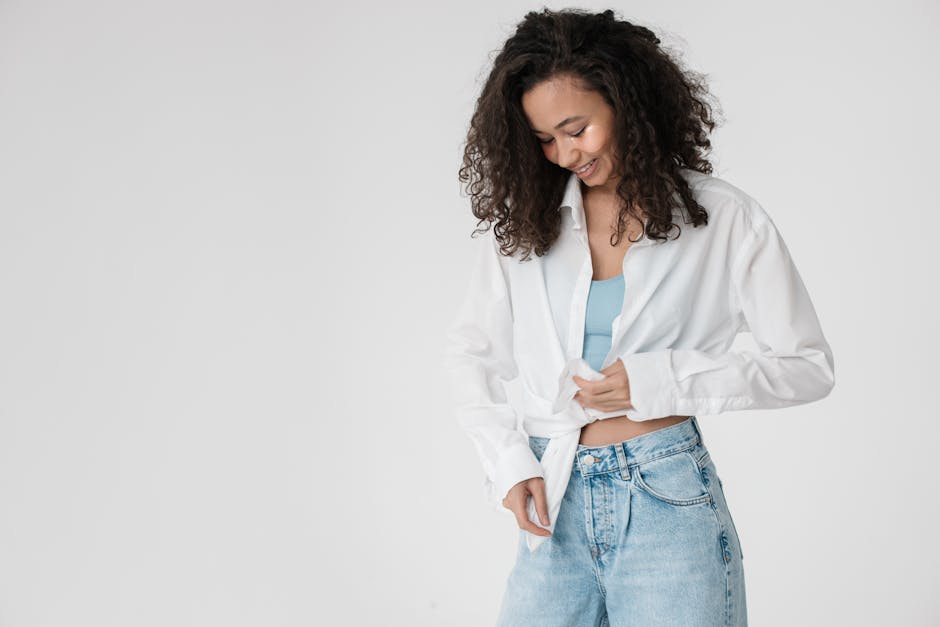
The standard belt loop on women’s jeans is usually 2 inches high, but using a 2-inch belt is often overkill and can feel restrictive. A 1.25-inch to 1.5-inch belt is typically the most versatile. A 1-inch belt (often called a “skinny” belt) is largely decorative; it lacks the surface area to effectively hold up heavy denim and will often look disproportionate against the thick seams of a pair of jeans. For boyfriend jeans or relaxed fits, a 1.5-inch belt provides the necessary visual and physical weight to balance the extra fabric. This wider surface area also helps distribute the pressure of the waistband more evenly across the hips, reducing the likelihood of the belt “digging in” during long periods of sitting.
The Problem of the “Belt Gap”
Even the best belt cannot fix a pair of jeans that is fundamentally the wrong shape for the wearer. If there is more than two inches of space at the back of the waistband, a belt will cause the fabric to bunch uncomfortably. This bunching creates pressure points on the lower back and can lead to premature wear of the denim fibers at the fold points. To mitigate this, look for belts with a slight natural curve or those made of braided leather (like the Anderson’s model mentioned above). Braided belts allow the buckle to be inserted anywhere, providing a custom fit that can pull in a gap more evenly than a notched belt. Additionally, some heritage brands offer “contoured” belts that are cut in a circular arc rather than a straight line, mirroring the natural flare of the human hip.
Hardware Integrity and The Anatomy of the Buckle

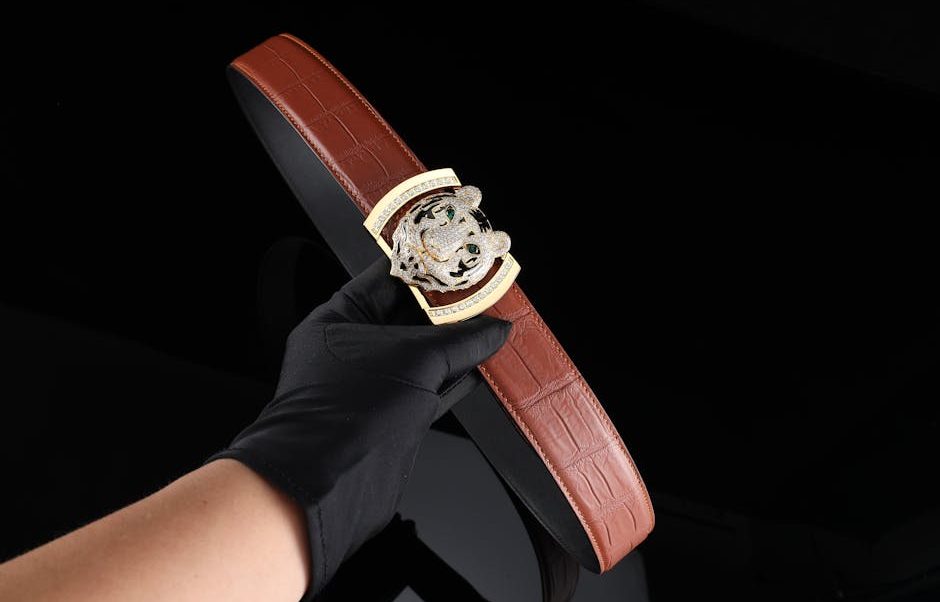
The buckle is the most common point of failure in any belt system. Cheap buckles are often made of “pot metal” (low-grade zinc alloys) that are plated to look like brass or silver. Over time, the plating wears off, exposing the reactive metals underneath, which can cause skin irritation or nickel allergies. When searching for the best belt for jeans, prioritize solid brass, stainless steel, or hypoallergenic titanium. Solid brass hardware is particularly desirable because it is heavy, durable, and develops a beautiful aged look that complements the fading process of indigo denim.
Prong vs. Plate Buckles
The most common buckle type for denim is the center-bar or heel-bar prong buckle. This design is technically superior for jeans because it allows the belt to lie flatter against the waistband. Plate buckles, which often feature large logos or decorative elements, can create a protrusion that interferes with the drape of untucked shirts. Furthermore, the prong on a high-quality buckle should be made of the same material as the frame; a steel prong on a brass frame will eventually wear through the softer metal, leading to structural failure. When inspecting a buckle, look for “cast” rather than “stamped” metal, as cast hardware is significantly denser and less likely to snap under tension.
Common Pitfalls: Why Most Belts Fail the Denim Test
Many consumers prioritize aesthetic appeal over mechanical function, leading to several common mistakes. The first is selecting a belt that is too flexible. While “soft” leather feels premium in the store, it often lacks the internal structure to support the weight of 12oz or 14oz denim. A belt should have a certain degree of resistance when you attempt to twist it. If it twists easily like a ribbon, it will likely roll over the top of your waistband within weeks.
Another pitfall is the “one-size” trap. Belts that are too long result in an excessive “tail” that must be tucked into loops, often causing the belt to sit lopsided. Conversely, a belt that is too short forces the wearer to use the final hole, which puts maximum stress on the weakest part of the leather. Ideally, a belt should be fastened at the middle hole (usually the third of five), allowing for minor weight fluctuations and ensuring the buckle is centered. To find your correct size, measure your favorite pair of jeans through the loops and add two inches to that measurement.
Maintenance Protocols for Extending Belt Lifecycle
To ensure a high-quality leather belt lasts for a decade or more, a specific maintenance routine is required. Leather is a biological material that can desiccate and crack if not properly hydrated. This is especially true for belts worn with jeans, as the indigo dye from the denim can transfer to the leather, and the friction of the denim’s rough surface can abrade the hide.
- Conditioning: Apply a high-quality leather conditioner (containing beeswax or mink oil) every six months. This keeps the fibers supple and prevents the leather from becoming brittle around the buckle holes. Avoid conditioners with high silicone content, as these can seal the pores and prevent the leather from breathing.
- Rotation: Avoid wearing the same belt every single day. Leather needs time to “rest” and shed the moisture it absorbs from your body heat. Rotating between two belts can triple the lifespan of each by allowing the fibers to contract and return to their original shape.
- Cleaning: If indigo transfer occurs, do not use harsh chemicals. A damp cloth with a tiny amount of saddle soap is usually sufficient. Always allow the leather to air dry away from direct heat sources like radiators, which can shrink and warp the fibers.
- Hardware Care: If you have a solid brass buckle that has tarnished more than you like, a simple paste of lemon juice and baking soda can restore the shine without damaging the leather, provided you are careful during application. For stainless steel, a microfiber cloth is usually all that is needed.
Ultimately, the best belt for jeans for women is one that balances the tensile requirements of the denim with the anatomical needs of the wearer. By focusing on full-grain materials, solid hardware, and appropriate widths, you can move away from the cycle of disposable accessories and toward a functional, long-lasting wardrobe. Whether you choose the rugged utility of a Patagonia webbing belt or the artisanal refinement of a Maximum Henry leather piece, the goal is the same: a secure fit that allows the denim to perform as intended without constant manual adjustment. Investing in a high-quality belt is not just a fashion statement—it is a commitment to the longevity and comfort of your entire wardrobe.