Does the technical distinction between a sport coat, a blazer, and a suit jacket actually matter when selecting attire for a wedding? While these terms are often used interchangeably in casual conversation, the nuances in construction, fabric weight, and silhouette determine whether a garment appears sophisticated or merely functional. A wedding environment demands a higher degree of intentionality in design than a standard office setting. Selecting the best blazer design for a wedding requires an objective assessment of the venue, the expected level of formality, and the physiological comfort of the wearer throughout a multi-hour event.
What are the technical differences between wedding blazers and business blazers?
The primary differentiator between a blazer intended for a wedding and one designed for the boardroom lies in the construction of the shoulder and the canvas. Business blazers often utilize a structured, padded shoulder to project authority. Conversely, modern wedding blazer designs frequently lean toward a “soft” or “unstructured” shoulder, often referred to as a Neapolitan style. This design allows for a more natural drape, reflecting a celebratory rather than a corporate atmosphere. The lack of heavy padding makes the garment lighter and more breathable, which is a critical consideration for ceremonies that transition from afternoon sun to evening receptions.
Canvas construction is another technical detail that separates high-end wedding blazers from mass-market options. A full-canvas blazer features an internal layer of horsehair or synthetic material that runs the length of the jacket front. Over time, this canvas conforms to the wearer’s body, creating a custom-like fit. Many mid-range wedding blazers use a half-canvas construction, providing structure in the chest and lapel while remaining affordable. For a wedding, the fluid movement of a canvassed jacket is superior to the stiffness of a fused (glued) jacket, which can appear rigid and develop bubbles after dry cleaning.
Buttons also serve as a signal of intent. A traditional navy blazer often features metal buttons, which can feel too nautical or collegiate for a formal wedding. For a wedding-appropriate design, look for horn, corozo (nut), or mother-of-pearl buttons. These materials offer a subtle texture and color variation that complements the fabric rather than distracting from it. The “Barchetta” pocket—a chest pocket with a slight upward curve resembling a small boat—is another design element found in premium wedding blazers that adds a touch of Italian flair without being ostentatious.
How to choose blazer fabrics for summer vs. winter weddings?
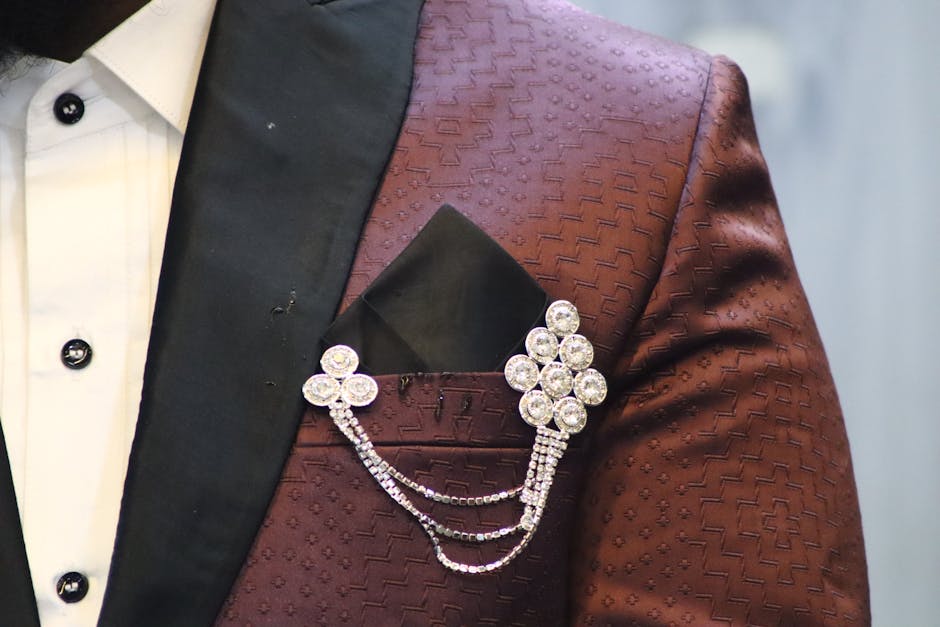
Fabric selection is the most significant factor in both the aesthetic and the thermal regulation of a blazer. For summer weddings, specifically those held outdoors or in tropical climates, the objective is to maximize airflow. High-twist wool, often marketed as “Fresco,” is an ideal choice. The open weave allows heat to escape while the natural resilience of the wool prevents excessive wrinkling. Another excellent summer option is a wool-silk-linen blend. This combination offers the structure of wool, the sheen of silk, and the cooling properties of linen, while the presence of wool helps mitigate the deep, messy creases typical of 100% linen garments.
Winter weddings require a shift toward higher gram weights and denser weaves. A wool flannel blazer provides a soft, matte finish that feels appropriate for colder months and evening events. Flannel has a natural loft that traps heat, making it functional for outdoor photos. Alternatively, a heavy twill or a subtle herringbone weave in a Super 110s or 120s wool provides a sharp, crisp look that holds its shape well throughout a long day of sitting and standing. The “Super” number refers to the fineness of the wool fibers; while higher numbers (like 150s or 180s) are softer, they are also more fragile and prone to wrinkling, making 110s to 130s the sweet spot for wedding durability.
Common Wedding Blazer Fabric Specifications
| Fabric Type | Typical Weight (gsm) | Best Use Case | Wrinkle Resistance |
|---|---|---|---|
| Fresco Wool | 230 – 280 | Summer/Outdoor | High |
| Wool-Silk-Linen | 240 – 290 | Destination/Beach | Moderate |
| Worsted Wool (S120) | 270 – 320 | Year-round/Indoor | High |
| Wool Flannel | 300 – 380 | Winter/Evening | Moderate |
Comparing single-breasted vs. double-breasted designs for formal ceremonies
The choice between a single-breasted and a double-breasted blazer is largely a question of geometry and formality. The single-breasted, two-button blazer is the standard for a reason: it is universally flattering and easy to wear. In a wedding context, the single-breasted design with a notched lapel is the safest choice for a guest. However, for those looking to elevate their presence—such as the groom or a member of the wedding party—a peaked lapel on a single-breasted jacket adds a vertical line that draws the eye upward, creating an illusion of height and a more formal silhouette.
Double-breasted blazers have seen a resurgence in wedding fashion due to their inherent sense of occasion. A 6×2 configuration (six buttons total, two for fastening) is the classic choice. Because a double-breasted jacket has more fabric overlapping the torso, it provides a powerful, structured look. This design is particularly effective for leaner individuals, as it adds visual breadth to the chest. It is important to note that a double-breasted blazer must remain buttoned while standing to maintain its intended shape. This makes it a slightly more restrictive choice for weddings involving significant dancing or movement, but the trade-off is a significantly higher level of sartorial impact.
Lapel width is a secondary but vital consideration. A narrow lapel (under 2.75 inches) can look dated or overly “trendy,” whereas a wider lapel (3.25 to 3.75 inches) conveys a timeless, masculine aesthetic. For a wedding, a mid-to-wide lapel that terminates roughly halfway to the shoulder seam is the most balanced choice. This ensures the blazer remains relevant in photographs for decades rather than looking like a relic of a specific fashion cycle.
Best blazer designs for casual outdoor or beach weddings
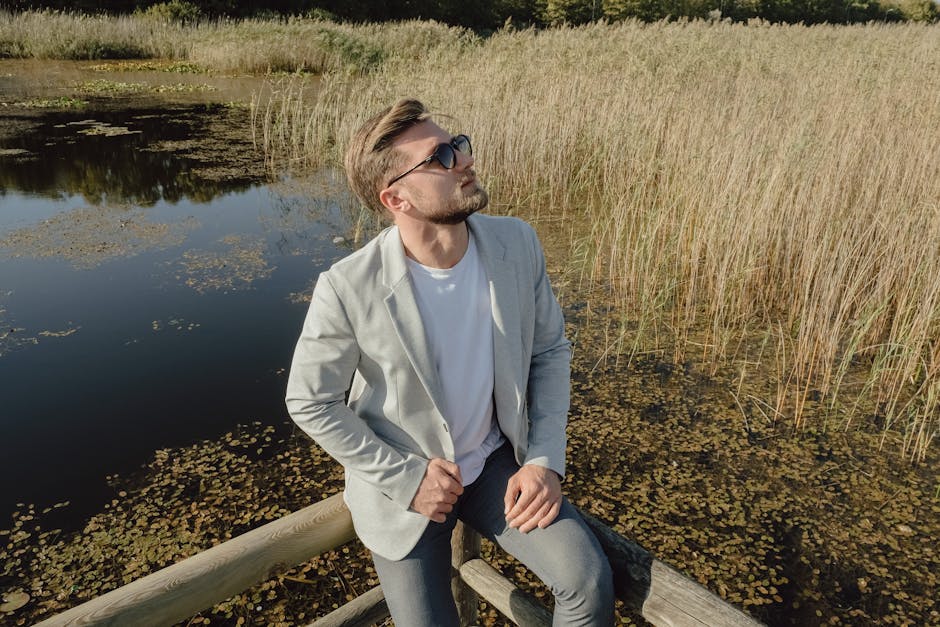
Casual weddings present a unique challenge: maintaining a sense of decorum without appearing overdressed for the environment. The unconstructed blazer is the premier solution for this scenario. By removing the internal linings and shoulder pads, the garment becomes as light as a cardigan while retaining the silhouette of a formal jacket. This design works best in lighter colors like sand, pale blue, or sage green, which reflect sunlight and align with the natural palette of outdoor venues.
Texture plays a crucial role in casual wedding blazer design. Seersucker, once limited to pinstriped blue and white, is now available in solid navy or olive tones. The puckered texture of seersucker creates space between the fabric and the skin, facilitating airflow. Another option is the hopsack weave. Hopsack is a coarse, basket-like weave of wool that is highly breathable and resists wrinkling. A navy hopsack blazer is perhaps the most versatile garment a man can own, as it bridges the gap between casual and formal with ease.
When attending a beach wedding, prioritize the “half-lined” or “butterfly lined” blazer. This design only covers the upper back and sleeves with silk or Bemberg, leaving the rest of the fabric open to breathe. This prevents the common issue of back perspiration visible through the fabric.
Top-rated blazer brands for weddings in 2024: Price and performance
Choosing a brand often comes down to the balance between construction quality and price. For those seeking a modern, slim-to-athletic fit with high-quality Italian fabrics, SuitSupply remains the benchmark. Their “Havana” model is particularly well-suited for weddings due to its natural shoulder and various fabric options.
- SuitSupply Havana Blazer (~$499): Features a half-canvas construction and a wide range of Vitale Barberis Canonico fabrics. Pro: Excellent value for construction. Con: Sizing can be inconsistent for broader builds.
- Canali Kei Blazer (~$1,250): The gold standard for unconstructed luxury. It uses premium wool and silk blends that feel weightless. Pro: Superior drape and hand-finished details. Con: Significant financial investment.
- Bonobos Unconstructed Italian Wool Blazer (~$400): A favorite for destination weddings. It is completely unlined and very packable. Pro: Multiple fit profiles (Slim, Athletic, Standard). Con: Lacks the formal structure of a canvassed jacket.
- Todd Snyder Sutton Blazer (~$598): Offers a slightly more traditional American silhouette with a modern edge. Pro: High-quality fabrics from renowned mills. Con: Sleeves are often long and require professional tailoring.
How should a wedding blazer fit? (Key measurements and tailoring points)
No amount of high-quality fabric can compensate for a poor fit. In a wedding blazer, the most critical measurement is the shoulder. The seam of the jacket should sit exactly where your arm meets your shoulder. If the seam overhangs, it creates a “divot” that looks sloppy; if it is too short, the fabric will pull across the upper back. Unlike the waist or sleeve length, the shoulder is notoriously difficult and expensive for a tailor to alter, so it must be correct off the rack.
The sleeve length should allow for approximately half an inch of shirt cuff to be visible when your arms are at your sides. This small detail provides a finished, intentional look that separates a well-dressed guest from someone wearing an off-the-rack suit without alterations. The body of the blazer should follow the natural contour of the torso without pulling. You should be able to slide a flat hand between the buttoned jacket and your chest, but not a fist. If the fabric forms an “X” shape around the button, the jacket is too tight.
Length is the final fit metric. A traditional rule is that the hem of the blazer should reach the first knuckle of your thumb when your hands are relaxed at your sides. However, modern designs often run slightly shorter for a more contemporary look. The key is to ensure the blazer covers the majority of the seat (the rear). A blazer that is too short can look like a “bum freezer” and disrupt the proportions of the body, making the wearer’s torso look stunted in photographs.
Coordinating blazer colors with wedding themes and dress codes
While black is the standard for tuxedos, it is rarely the best choice for a standalone blazer at a wedding. Black can appear harsh under daylight and often looks like a mismatched suit jacket. Instead, navy and charcoal are the most reliable foundations. Navy is particularly effective because it pairs well with almost any trouser color, from light grey to tan. For a summer wedding, a “true blue” or a mid-blue is more vibrant and celebratory than a dark midnight navy.
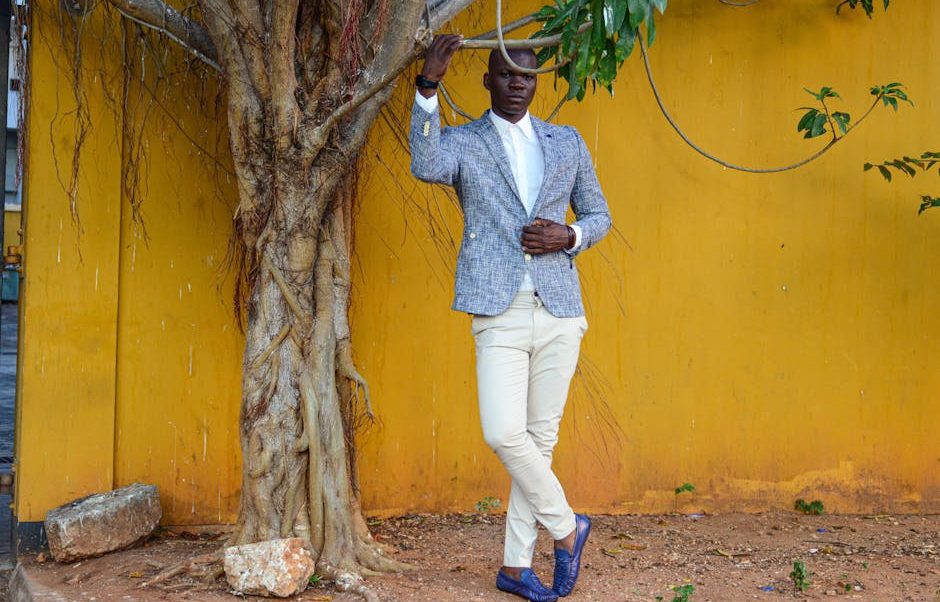
Earth tones have become increasingly popular for semi-formal and “boho” wedding themes. An olive green or tobacco brown blazer in a textured fabric like linen or corduroy (for autumn) offers a sophisticated alternative to the standard blue. These colors work best when paired with neutral trousers like cream or stone. When selecting a color, consider the time of day. Lighter colors are appropriate for morning and afternoon ceremonies, while darker tones are better suited for evening events and indoor receptions.
Pattern is the final frontier of wedding blazer design. A subtle windowpane or a micro-check can add visual interest without being distracting. The key is scale: the pattern on the blazer should be large enough to be distinct from a distance but not so bold that it clashes with the bride or groom’s attire. A solid-colored blazer with a textured weave (like bird’s eye or nailhead) is often a better choice than a loud pattern, as it provides depth and sophistication while remaining understated.