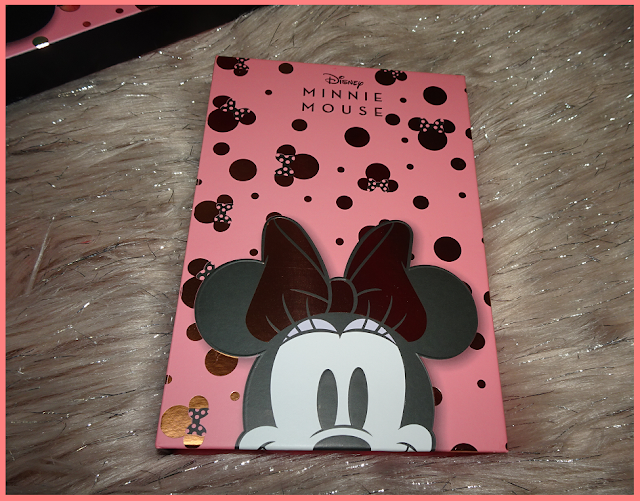
The Makeup Revolution x Disney Minnie Mouse palette ($12 / £10) is one of those products that either earns its spot on your vanity or collects dust behind prettier packaging. The difference is knowing which of its 18 shades to actually reach for — and understanding the technique that makes the reds and pinks behave.
This tutorial is built for Disney theme week: a look that reads clearly as Minnie Mouse inspired, holds up over several hours, and photographs well without looking like a Halloween costume.
What’s Actually Inside the Minnie Mouse Revolution Palette
Know what you’re working with before you open a brush. The palette is arranged in three rows, and not all rows are equal.
| Row | Finish Types | Color Range | Best Use |
|---|---|---|---|
| Top row | Mattes | Ivory, warm nude, taupe, rose brown | Base, transition blending, brow bone highlight |
| Middle row | Mixed — mattes and shimmers | Dusty pink, berry, deep red matte, medium brown | Crease definition, halo eye, outer V |
| Bottom row | Shimmers and chunky glitters | Black matte, red glitter, hot pink shimmer, white pearl, red shimmer | Lid color, inner corner pop, liner work |
The shades that genuinely perform
The top-row mattes are the surprise of this palette. They’re well-pigmented, blend without patchiness, and have minimal kickback. For a $12 palette, the transition shades compete with options costing three times as much. The ivory and warm nude work as a base, and the taupe softens crease edges without muddying the color underneath.
The berry matte in the middle row is the Minnie Mouse shade. It’s the one that does the most character work — deep enough to create definition, warm enough to feel intentional rather than accidental. Start light. It’s dense and needs to be built up slowly or it becomes a ring rather than a shadow.
The shades to approach carefully
The red chunky glitter in the bottom row looks extraordinary in the pan. On the face, it delivers significant fallout — loose particles that land on the cheek, under the eye, and occasionally on the nose before you’ve finished. Use it last in your routine, apply with a flat synthetic brush using a press-and-hold motion rather than sweeping, and do your eye makeup before your foundation so cleanup doesn’t destroy your base.
The black matte is genuinely pigmented — more so than expected at this price point. That’s both an asset and a liability. Too much on a fluffy brush and correction becomes a full eye redo. Treat it as a precise liner shade rather than a blending color.
Step-by-Step: Building the Wearable Minnie Mouse Eye Look
Seven steps. The result reads clearly as character-inspired, not character-costume.
Step 1: Prime the lid — non-negotiable
The reds and berries in budget palettes crease faster than neutrals because the binding agents are different from higher-end formulas. Without a primer underneath, the middle-row colors start moving at the two-hour mark. Use the NYX Professional Makeup Eyeshadow Base ($8) or Urban Decay Primer Potion ($24) — either works. Apply from lash line to brow bone, blend until tacky, wait 60 seconds before touching any shadow.
Step 2: Set a base and build the transition shade
Take the ivory or warm nude matte and sweep it across the entire lid and brow bone with a large fluffy brush. This sets the primer and creates an even surface. Then pick up the taupe or rose brown on a medium fluffy brush and work it into the crease using a back-and-forth windshield wiper motion — no pressure, just consistent movement. This builds depth without committing to the Minnie color story yet.
Step 3: Work the berry into the crease
Switch to a smaller fluffy brush. Tap off the excess. Start at the outer corner of the crease and work the berry matte inward in short, circular strokes — building the color up gradually rather than loading the brush and pressing hard. The target is a soft, deepened crease that frames the eye. Go back in with the taupe if the berry reads too harsh.
This step is where most looks go wrong. Too much product too fast creates a solid ring of dark shadow that won’t blend out. Small amounts, repeated passes. Takes an extra two minutes. Worth it.
Step 4: Apply the signature lid color
Use a flat synthetic brush. Pat the hot pink shimmer onto the center of the lid using a pressing motion — don’t drag. This is the character moment. Keep it on the mobile lid and let the crease color frame it. If you want more drama for night or content creation, layer the red shimmer over the pink once it’s set.
Step 5: Define the lower lash line
Small pencil brush, berry matte or taupe, light hand. Smoke the lower lash line from the outer corner to center only. Soft definition, not heavy liner. Taking it all the way to the inner corner of the lower lash line at this weight makes the eye look smaller, not larger.
Step 6: Inner corner and highlight
Pat the white pearl shimmer into the inner corner and sweep a small amount onto the center of the brow bone. This is the step most people skip and shouldn’t. It opens the eye, adds light, and makes the finished look readable in photos.
Step 7: Line with the black
Use a thin liner brush dampened with setting spray — this controls the black matte and creates a more precise line than a dry brush. A thin line along the upper lash line, slightly thicker at the outer third, with a small upward flick at the corner. Clean and intentional. The black here anchors the whole look and gives it the graphic quality that reads as Minnie Mouse rather than just a pink eye.
The Honest Formula Verdict
For $12, the matte neutrals and berry shades overdeliver. The glitters underdeliver in longevity but look great in photographs taken within the first few hours. Buy it for the reds, pinks, and transition shades — those carry the look. Treat the chunky glitter as a special-occasion addition rather than a daily driver.
Day Look vs. Night Look: Which Shades to Map Where
The same palette reads completely differently depending on which row you prioritize. Here’s the exact mapping:
| Occasion | Lid | Crease | Lower Lash | Liner | Overall Read |
|---|---|---|---|---|---|
| Day (park, brunch, content) | Hot pink shimmer | Taupe + rose brown matte | Minimal or skipped | Thin black line only | Soft, wearable, polished |
| Night (event, party, editorial) | Red glitter + red shimmer layered | Deep berry + medium brown | Berry matte smoked fully out | Full winged liner | Dramatic, high-contrast, statement |
Which version works best for Disney theme week content
If you’re shooting photos or video for a theme week series — TikTok tutorials, Instagram carousels, flat lays — go night. The contrast photographs better. The glitter catches light in a way that communicates clearly even in a compressed thumbnail. The drama is the point of content days.
If you’re actually going to a Disney park and wearing this for eight hours in heat: go day. Red glitter fallout on your cheeks at hour three, in August, is not the vibe. The day version holds under sunscreen, light perspiration, and the inevitable mid-afternoon touch-up without needing a full redo.
Longevity with and without setting spray
Day version with primer underneath: 8+ hours without visible creasing. Night version with the glitter shades starts showing movement around 5-6 hours in humid conditions. Use a setting spray over the finished look — the Urban Decay All Nighter ($32) or the e.l.f. Power Grip Primer spritzed as a final seal both extend the glitter shades significantly. One or two light passes. Don’t soak the face.
Three Mistakes That Ruin This Look
Most bad outcomes with this palette trace back to the same three errors, not the formula.
- Skipping primer with red and berry shades. Revolution’s pigmented mattes have a drier formula than premium palettes. Without a sticky base underneath, they crease into fine lines within two hours on most skin types. Primer isn’t optional with this palette — it’s the mechanism that makes the formula functional.
- Using a fluffy brush with the chunky glitters. Fluffy brush plus glitter equals glitter everywhere. A flat, densely packed synthetic brush — even a $3 e.l.f. Cosmetics flat shader — contains the glitter to the lid where it belongs. The brush choice matters more than technique here.
- Expecting this palette to behave like a neutral. The color story is pinks, reds, and black. Reaching for it hoping to build subtle office eyes means constantly fighting the palette’s design logic. Use it on days when the color story fits — Disney theme week, a night out, content creation — and reach for a separate neutral palette for everyday low-key looks.
There’s a quieter fourth mistake: buying it for the packaging and never opening it. The mattes in the top row are genuinely good everyday shades. The palette earns its counter space if you use the neutrals regularly and save the character shades for when the moment calls for them.
What to Pair With the Minnie Mouse Eye
Which lip color works with this eye?
For the day version, a sheer berry gloss or soft pink keeps things cohesive without competition. The Charlotte Tilbury Pillow Talk lip liner ($26) used on the lips with a clear gloss over the top is genuinely beautiful alongside the soft pink shimmer lid — it bridges the pink tones without adding more color complexity.
For the night version, a matte red lip. MAC Ruby Woo ($22) is the reference — blue-toned red, true matte, long-wearing, and it photographs cleanly without going orange in flash photography. If full red lip with red eye feels like too much, a deep berry — MAC’s Rebel or NYX’s Whipped Caviar Lip Color — picks up the crease tones without adding another color family to the look.
Should the outfit match the palette colors?
Not directly. Red-on-red or pink-on-pink reads flat in photos — the makeup disappears into the clothing. The better move: anchor in black. A black dress, black top, or black accessories let the makeup carry the color. Minnie Mouse herself wears a red dress against black trim. That contrast ratio works because it lets each element be distinct. Copy the logic, not necessarily the costume.
Face makeup approach
Keep the base neutral and light. A full glam base — heavy coverage, strong contour, sharp brows — competes with the eye for attention and the eye always wins when it’s this bold. Use a light-to-medium foundation or tinted moisturizer, a powder set specifically under the eyes to catch fallout during cleanup, a peachy-pink blush placed high on the cheek, and natural brows filled and set with a clear brow gel. The eye is doing the work. Let it.
Finishing the Full Minnie Mouse Look
The eye palette is the centerpiece, but a few additional details close the gap between a nice eye and a complete character-inspired look.
The beauty spot detail
A single small dot placed at the corner of the upper lip using a MAC Chocolate Brown liner on a fine-point brush — then set with a tiny amount of translucent powder so it stays put — references the character without reading as costume makeup. Skip it if it feels like too much. It photographs well; in person, most people won’t clock what it is.
Blush placement for the Minnie character read
High on the cheekbone, swept toward the temple. Minnie’s aesthetic is round and cheerful — the sculpted, hollowed contour of a structured fashion look doesn’t fit the character energy. A pink-toned blush (the Charlotte Tilbury Pillow Talk blush at $40, or Revolution’s own blusher at $5 if you’re keeping the look within the brand) applied to the apple and blended upward reads correctly. Keep it light — the eye is already saturated with color.
Brow shape matters here
Natural and defined, not sharp or angular. Minnie Mouse is soft and rounded. Fill in sparseness with short strokes, brush the hairs up with a spoolie, and set with a clear brow gel. Hard architectural brows pull the look toward editorial or high-fashion — which works in other contexts but disconnects from the Disney character warmth that makes theme week content resonate.
Disney theme week works when the look is recognizable at a glance. The Minnie Mouse palette gives you the right colors in one compact for $12. Primer underneath, the berry crease technique from Step 3, the pink shimmer on the lid, and a clean black line — that’s the look that started this tutorial, and that’s what you have now.