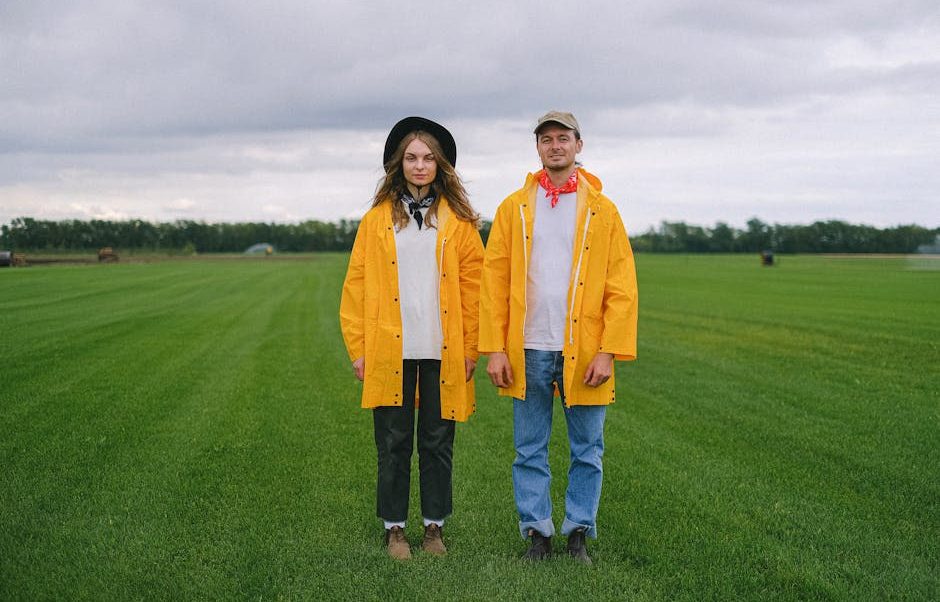
Most women buying a raincoat focus on color and cut. That’s understandable. But the coat that looks perfect on the rack might leave you soaked by mile two of a morning walk — and the difference between an $80 raincoat and a $400 one isn’t always obvious until you’re caught in a downpour.
What “Waterproof” Really Means on a Raincoat Label
A coat labeled “waterproof” and one labeled “water resistant” are not the same thing. Not even close. Brands use these terms inconsistently, and most buyers don’t discover the distinction until they’ve been burned once.
The confusion isn’t accidental. There’s no universal standard forcing manufacturers to define “waterproof” in a measurable way on consumer packaging. What you’re actually looking for is a specific number — and most brands bury it in a spec sheet, if they list it at all.
The Hydrostatic Head Test Explained
Waterproofing is measured using the hydrostatic head test. Engineers apply a column of water directly to the fabric and measure how much pressure it takes before water seeps through. The result is expressed in millimeters.
A reading of 1,500mm means the fabric can withstand a 1.5-meter column of water before leaking. That sounds like a lot. It isn’t.
- 1,500mm — handles light drizzle only; not suitable for real rain
- 5,000mm — moderate rain for short durations
- 10,000mm — heavy rain and sustained exposure
- 20,000mm+ — driving rain, prolonged outdoor activity
For everyday urban use — commuting, errands, weekend walks — 5,000mm is the absolute minimum worth buying. Anything below that is essentially a fashion piece. For hiking, outdoor sports, or living in a genuinely wet climate like the Pacific Northwest or Scotland, 10,000mm is the practical floor.
DWR Coating vs. Waterproof Membrane — Not the Same Thing
Most raincoats have two separate systems working together: a DWR (Durable Water Repellency) coating on the outer fabric, and a waterproof membrane laminated inside.
The DWR coating is what makes water bead up and roll off. It’s what you admire in the first few weeks of owning a new jacket. The membrane is what actually stops water when the outer fabric gets saturated.
DWR wears off. Washing, UV exposure, and abrasion degrade it over time. When that happens, the outer fabric starts to “wet out” — it absorbs water and clings to the membrane underneath, making the jacket feel cold and heavy even if nothing has technically leaked. You can restore DWR with products like Nikwax TX.Direct or Grangers Performance Repel Plus, but most owners never do.
The membrane underneath — Gore-Tex, eVent, H2No, Helly Tech — is what separates a quality raincoat from a disposable one.
Why “Water Resistant” Labels Should Raise Red Flags
If a jacket is only “water resistant” with no further specification, that typically means it relies on DWR alone, with no waterproof membrane behind it. It’ll handle a light mist. Real rain is a different question.
Check the spec sheet. If there’s no hydrostatic head rating listed, that tells you something about what the manufacturer thinks you should know.
Waterproofing Ratings at a Glance: A Practical Reference
Different activities demand different protection. This table maps ratings to real-world conditions so you’re not guessing at the rack.
| Rating (mm) | What It Handles | Best For | Not Suitable For |
|---|---|---|---|
| 1,500–3,000 | Light drizzle, brief exposure | Casual city use on dry-ish days | Commuting in heavy rain |
| 5,000–8,000 | Moderate rain, 1–2 hours | Daily commuting, dog walking | Hiking, prolonged outdoor activity |
| 10,000–15,000 | Heavy rain, extended wear | Travel, hiking, music festivals | Technical alpine conditions |
| 20,000+ | Sustained heavy rain, high exertion | Trail running, mountaineering | Nothing — covers all conditions |
What Rating You Actually Need for Daily Commuting
For a typical urban commuter, 10,000mm is the practical sweet spot. You’re not doing technical outdoor activities, but you need real protection when you’re stuck in a downpour waiting for a delayed train. That’s enough specification to keep you dry through nearly any commute without overspending on alpine-grade materials you’ll never use.
Why Breathability Matters as Much as Waterproofing
A jacket’s breathability is measured in grams of moisture vapor that pass through one square meter of fabric per 24 hours (g/m²/24hr). Gore-Tex Pro achieves around 28,000g/m²/24hr. Budget membranes typically sit between 5,000–10,000g/m²/24hr.
Low breathability means you’ll be damp from sweat even if no rain penetrates. For walking-pace activity in cool weather, this matters less. For anything strenuous, it’s the difference between comfortable and miserable — and it’s why cheap “waterproof” jackets feel clammy after twenty minutes of fast walking.
The One Flaw That Sinks Most Raincoats
Seam sealing. A fabric rated at 20,000mm means nothing if the stitching holes aren’t sealed. Water moves through seams first, not through the fabric itself. Look specifically for fully seamed construction — every seam taped — rather than critically seamed, where only the main seams are covered. In sustained heavy rain, this distinction becomes the deciding factor faster than most buyers expect.
Best Raincoat Brands for Women, Performance-Ranked
These rankings prioritize waterproofing performance, build quality, and durability over appearance. Aesthetics matter — nobody wants to look miserable — but they’re the secondary criterion here.
| Brand & Model | Waterproof Rating | Membrane | Price (approx.) | Best Use Case |
|---|---|---|---|---|
| Arc’teryx Beta AR | 20,000mm+ | Gore-Tex Pro | $700 | Technical outdoor, relentlessly wet climates |
| Patagonia Torrentshell 3L | 15,000mm | H2No Performance Standard | $179 | Hiking, travel, everyday use |
| Helly Hansen Aden | 10,000mm | Helly Tech Protection | $130 | Maritime and Scandinavian weather |
| The North Face Antora | 10,000mm | DryVent (fully seamed) | $130 | Urban commuting, moderate hiking |
| Columbia Arcadia II | 10,000mm | Omni-Tech (critically seamed) | $80 | Budget everyday commuting |
| Stutterheim Stockholm | Not rated (PU-coated) | Polyurethane coating | $250 | Fashion-forward urban rain |
| Rains Curve Jacket | Not rated (PU-coated) | Polyurethane coating | $120 | Minimalist style, city use |
Best for Outdoor Activities: Arc’teryx and Patagonia Lead by a Distance
The Arc’teryx Beta AR is the clearest performance winner for active outdoor use. Gore-Tex Pro laminate, fully taped seams, articulated patterning for overhead movement. It costs $700. That’s a serious commitment. But for women who hike regularly, trail run, or live in climates where rain is genuinely relentless — British Columbia, the Scottish Highlands, New Zealand’s Fiordland — it’s the jacket that removes rain from your list of variables entirely.
The Patagonia Torrentshell 3L at $179 is the value answer to most of what the Arc’teryx does. Three-layer H2No Performance Standard construction, fully seamed, genuinely waterproof in sustained heavy rain. It weighs 340g, packs into its own chest pocket, and has held up across multiple seasons of serious use in conditions that would destroy cheaper jackets. For most outdoor-focused women, this is the pick. The $521 gap between it and the Arc’teryx buys diminishing returns unless you’re regularly in alpine or expedition conditions.
Best Value Under $150: The North Face Antora Edges Ahead
The North Face Antora ($130) and Columbia Arcadia II ($80) both hit 10,000mm. The meaningful difference comes down to seam construction. The Antora uses DryVent technology with fully sealed seams. The Arcadia II uses Omni-Tech with critical seaming only. In moderate rain, both work well. In a sustained downpour lasting more than an hour, seam sealing becomes the deciding factor, and the Antora holds the advantage.
For pure budget value, the Arcadia II at $80 is hard to dismiss. Machine washable, pit zips included, and perfectly adequate for a normal urban commute through regular rain. Just don’t push it into prolonged heavy exposure.
Fashion-Forward Options: Stutterheim and Rains Operate by Different Rules
Stutterheim’s Stockholm raincoat and the Rains Curve Jacket use polyurethane-coated fabrics rather than technical membranes. Neither is designed for trail use. Both are designed for looking composed while walking from an office to a taxi in a rainstorm.
Stutterheim ($250) is Swedish, matte-finished, and genuinely elegant in a way no Gore-Tex jacket manages to be. It handles heavy urban rain well for its construction type. If your context is professional environments where a technical outdoor jacket looks conspicuously wrong, this is a legitimate choice — not a compromise. The Rains Curve Jacket ($120) offers similar PU-coated protection in a cleaner, more minimal silhouette at a lower price point.
When You Need a Parka, Not a Rain Jacket
A standard rain jacket stops at the hip. In summer, fine. In winter or early spring, a jacket ending at your waistband means your pants soak through below the hem, and no hip-length coat keeps you warm enough in cold rain on its own.
Three Signs You’ve Outgrown a Standard Rain Jacket
- You’re regularly caught in rain that lasts more than 30 minutes without shelter
- You live somewhere with cold-season rain — anything below 10°C (50°F) routinely
- You layer heavily underneath and need coverage that extends past your hips
At that point, look at longer cuts. The Patagonia Calcite Jacket extends to mid-thigh and uses the same H2No Performance Standard as the Torrentshell ($179). The Helly Hansen Aden Long Jacket ($180) covers the upper thigh and performs well in cold maritime climates. Arc’teryx offers the Centrale Parka ($450) in Gore-Tex for those who want full technical performance in an extended silhouette.
When a Fashion Raincoat Is the Wrong Tool Entirely
Stutterheim and Rains make excellent urban coats. They’re not suitable for sustained hiking or any activity where you’re generating significant body heat. Polyurethane coatings don’t breathe. You’ll be dry on the outside and wet from trapped condensation inside. These are city tools, not trail tools, and using them outside that context means buying them twice.
How Fit Determines Whether Your Raincoat Actually Works
Should a raincoat fit loosely or snugly?
Loose enough to layer under in cold weather, snug enough that excess fabric doesn’t funnel wind underneath the hem. The practical test: put on your thickest layering piece — typically a midweight fleece — and try the jacket over it. It should close easily and move with you without pulling across the shoulders. If the seams ride toward your neck when you raise your arms, it’s too small regardless of what the tag says.
Most technical brands size raincoats with a built-in layering allowance. Arc’teryx and Patagonia are consistent about this. Columbia tends to run large. The North Face women’s sizing has varied enough by model that trying on in person is worth doing when possible.
What does hood fit have to do with rain protection?
More than most people realize. A hood that falls over your eyes the moment you turn your head, or won’t fit over a warm hat, undermines the rest of the jacket’s performance. Look for hoods with a wired brim that holds its shape in wind, and a drawcord that adjusts independently at the face opening and the back of the head — these are separate adjustments and they matter.
Arc’teryx hoods are engineered with a shaped wired brim designed to direct rain off your face rather than over your forehead. It’s a noticeable difference on a genuinely wet day. The North Face Antora’s hood is functional but doesn’t match that peripheral vision clearance.
Does cuff design actually matter?
For most use cases, velcro cuff adjustments are adequate. Gauntlet cuffs — longer cuffs that seal over gloves — appear on the Arc’teryx Beta AR and select Patagonia technical models, but are rare in women’s cuts broadly. For casual use, standard cuffs are fine. For hiking in sustained rain, the gap between glove edge and sleeve is a real weak point that gauntlet cuffs close.
Final Verdict: Matching the Brand to the Situation
| Situation | Best Pick | Why It Wins |
|---|---|---|
| Technical hiking / outdoor use | Arc’teryx Beta AR ($700) | Gore-Tex Pro, fully seamed, eliminates rain as a variable |
| Best overall value | Patagonia Torrentshell 3L ($179) | 3-layer H2No, fully seamed, proven across seasons |
| Cold maritime climates | Helly Hansen Aden ($130) | Engineered for Scandinavian weather; warm-to-rain balance is excellent |
| Urban commuter, mid-range | The North Face Antora ($130) | Fully seamed DryVent; better seam protection than Columbia at same price |
| Budget everyday commuting | Columbia Arcadia II ($80) | 10,000mm Omni-Tech, machine washable, hard to beat at the price |
| Professional / urban style | Stutterheim Stockholm ($250) | Looks appropriate in business contexts; handles city rain without outdoor aesthetics |
| Minimalist fashion + city rain | Rains Curve Jacket ($120) | Clean lines, adequate for moderate rain, no technical bulk |
The gap between an $80 Columbia and a $700 Arc’teryx is real — but it’s not always relevant. A daily commuter walking three blocks to the train doesn’t need Gore-Tex Pro. A woman who spends weekends hiking in the Cascades does. Buying to the conditions you actually face, rather than the most impressive spec sheet available, is typically the decision you won’t regret.