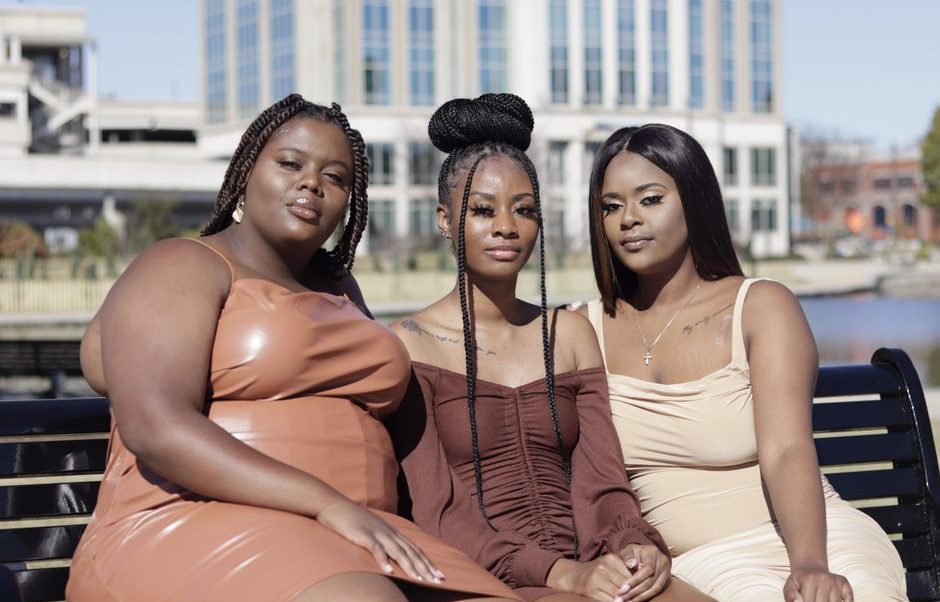
The most important thing to know about plus-size dress silhouettes is this: a silhouette is a geometry problem, not a size problem. The dress either matches the angles and proportions of your body or it fights them. That’s the entire game. I’ve spent years altering and fitting dresses on bodies from size 14 to 32, and the same rules apply at every size. The fabric falls the same way. The seams pull the same way. The only thing that changes is where the dress decides to place its horizontal lines.
This is not legal advice. Wait — wrong field. But the hedging instinct applies: no single silhouette works for every plus-size body, and anyone who tells you otherwise is selling something. What I can tell you is which silhouettes solve specific fit problems, which ones create them, and how to read a dress before you ever put it on.
Why Silhouette Matters More Than Size on the Label
A dress silhouette is the outline the garment creates when worn. For plus-size bodies, this matters more than the number on the tag because two size-20 dresses with different silhouettes will fit like they came from different planets. The label tells you circumference. The silhouette tells you where that circumference is allowed to exist and where it’s compressed, gathered, or ignored.
Most plus-size fit complaints — “it’s tight in the bust,” “it makes me look pregnant,” “it bags at the waist” — are silhouette mismatches dressed up as size issues. A woman with a full bust and narrow hips will have a completely different experience in an empire-waist dress than a woman with a defined waist and full hips. Same size. Same dress. Different geometry.
How to Read a Dress Before Trying It On
Look at the dress on the hanger and answer three questions. First, where is the narrowest point of the garment? That’s where the dress wants your narrowest point to be. If the narrowest point is under the bust and your narrowest point is your natural waist, the dress will fight you. Second, where are the seams? Princess seams running vertically through the bodice create shaping. A single horizontal seam under the bust creates an empire line. No seams at all means the dress relies entirely on stretch fabric, which reads differently on every body. Third, where does the skirt start to flare? A flare that starts at the natural waist creates a fit-and-flare. A flare that starts at the hip creates more of a trumpet. The lower the flare point, the more the dress will cling to your midsection before releasing.
The Three Fit Problems Every Silhouette Addresses
Every plus-size dress silhouette exists to solve one of three problems: bust accommodation, waist definition, or hip and thigh ease. A-line solves the hip and thigh problem but often ignores the waist. Fit-and-flare solves the waist problem but demands a defined waist to work. Empire solves the bust problem but can create a tent effect if the fabric is too stiff. When you know which problem you need solved, the silhouette choice becomes obvious.
The A-Line Dress: The Workhorse With a Caveat
The A-line is the most recommended plus-size silhouette and the most misunderstood. It fits at the shoulders and bust, then flares gradually to the hem, creating an “A” shape. The logic is sound: it skims over hips, thighs, and belly without clinging. But the A-line has a failure mode that nobody mentions: it can make a plus-size body look wider overall if the flare starts too high or the fabric is too stiff.
A good A-line for plus-size bodies starts the flare at the hip, not the waist. This keeps the bodice fitted enough to show you have a shape, then releases over the areas you want to hide. A bad A-line starts flaring at the bust and turns you into a triangle. The difference is usually in the side seams — if they angle outward from the underarm, put it back on the rack.
Brands that consistently get this right include Universal Standard, whose A-line dresses use a heavier ponte fabric that holds shape without stiffness, and Loud Bodies, a size-inclusive brand that cuts its A-lines with a subtle curve at the waist rather than a straight diagonal. The Universal Standard Geneva dress is the reference point here: fitted through the shoulder and bust, flare starting at the high hip, hem hitting at the knee. That’s the geometry you want.
Fit-and-Flare vs. Empire: A Comparison That Decides Your Waistline
| Feature | Fit-and-Flare | Empire Waist |
|---|---|---|
| Waist placement | Natural waist (narrowest point of torso) | Under the bust (high waistline) |
| Best for | Hourglass, pear, defined waist | Apple, full bust, pregnancy, no defined waist |
| Skirt behavior | Fitted bodice, full skirt from waist | Loose from underbust to hem |
| Common failure | Waist sits too high or too low | Tent effect, hides entire torso |
| Fabric that works | Cotton sateen, structured ponte, scuba | Soft jersey, rayon challis, silk |
| Fabric that fails | Stiff taffeta, heavy brocade | Stiff cotton, heavy linen |
The fit-and-flare is the most reliable plus-size silhouette when the waist is in the right place. The problem is that “the right place” varies by torso length. A woman with a short torso needs the waist seam to sit higher than the dress pattern assumes. A woman with a long torso needs it lower. Off-the-rack fit-and-flare dresses assume an average torso length, which means roughly half of plus-size women will find the waist seam in the wrong place. The fix is either alteration or choosing a brand that cuts for your torso length. Eloquii tends to cut for longer torsos. Kiyonna cuts for shorter ones. That’s the kind of thing you learn after enough returns.
The empire waist gets a bad reputation in plus-size fashion because it’s associated with maternity wear. That’s unfair. An empire waist is the correct choice when you have no defined waist to emphasize — think apple-shaped bodies where the midsection is the widest point. Trying to force a fit-and-flare on that body type creates a waist seam that cuts across the widest part of the body. That’s the opposite of flattering. The empire waist simply moves the visual interest upward, to the bust and face, and lets the fabric fall without compression. The key is fabric choice: soft, draping fabrics fall close to the body and show shape. Stiff fabrics stand away and create the tent effect everyone fears.
What a Wrap Dress Actually Does — and When It Fails

The wrap dress is the most over-recommended plus-size silhouette in fashion media. It’s not wrong — it’s just not universal. A wrap dress creates a V-neckline and a diagonal line across the body, both of which break up width and draw the eye vertically. It also allows adjustable fit, which matters when your bust and hip measurements put you in different sizes. A wrap dress forgives that gap.
But the wrap dress has two failure modes. First, the classic wrap dress is cut for a smaller bust-to-waist ratio than many plus-size bodies have. If the wrap doesn’t have enough overlap at the bust, it gaps open. You spend the day tugging at it. The fix is a wrap dress with a snap or hook at the V-neck, or a faux-wrap that’s sewn shut but keeps the diagonal line. Second, wrap dresses made from thin jersey cling to every contour. That’s fine if you want that. Most women don’t. The solution is a wrap dress in a heavier fabric — ponte, double-knit, or a woven with some structure.
For a real wrap dress that accounts for plus-size bust geometry, the Diane von Furstenberg plus-size line is the reference, but it’s expensive. A more accessible option is the Anthropologie plus-size wrap dresses, which tend to have deeper overlap at the bust. If you’re between sizes, size up in a wrap dress and use the tie to cinch. The extra fabric gives you more overlap at the bust, which solves the gapping problem.
The Sheath Dress Is Not Your Enemy
Most plus-size women avoid sheath dresses because they assume a fitted, straight-cut dress will show everything. That assumption is wrong. A sheath dress in the right fabric — one with weight and recovery, like a ponte or a double-knit — smooths and holds. It creates a continuous vertical line from shoulder to knee, which is the most lengthening silhouette there is. The problem is that most sheath dresses are made from thin, cheap fabric that shows every line of undergarments and every contour of the body. That’s a fabric problem, not a silhouette problem.
A well-cut plus-size sheath has vertical seams — princess seams or darts — that shape the fabric around the bust and waist without horizontal breaks. It should fit close but not tight. You should be able to pinch about an inch of fabric at the waist. If you can’t pinch anything, it’s too tight. If you can pinch more than two inches, it’s too loose and the smoothing effect disappears. The Lane Bryant ponte sheath is a decent budget option. The Universal Standard sheath dresses are better, with more substantial fabric and better seam placement, but they cost more. For a true investment piece, a made-to-measure sheath from eShakti — which lets you input your exact measurements — solves the torso-length problem entirely.
The Silhouette Decision Tree

Here’s the compressed version. Answer one question: where do you want the dress to fit, and where do you want it to skim?
- Defined waist, full hips: Fit-and-flare. The waist seam shows your narrowest point, the full skirt clears your hips.
- No defined waist, full bust: Empire waist in a soft, draping fabric. Moves visual interest up, skims everything else.
- Want one long vertical line: Sheath in ponte or double-knit. Not thin jersey. Never thin jersey.
- Between two sizes, want adjustability: Wrap dress with deep bust overlap. Size up for more coverage.
- Want maximum comfort, minimal waist emphasis: A-line with flare starting at the hip. Avoid flare from the bust.
That’s the decision tree. No more analysis needed. If a dress doesn’t match the silhouette that solves your specific geometry problem, it doesn’t matter how much you like the print. Put it back.
What to Avoid: The Three Silhouette Traps
Three silhouettes consistently fail plus-size bodies. First, the shift dress — a straight, unstructured cut with no waist definition. On a size 2, it reads as effortless. On a size 20, it reads as a sack. The shift dress has no geometry. It just hangs. Unless you’re deliberately going for a voluminous, oversized look (which is a valid fashion choice, but a different conversation), the shift dress does nothing for you.
Second, the bodycon dress in thin fabric. Bodycon can work — it’s a deliberate choice to show every contour, and some women love that. But it requires a very specific fabric: thick, high-recovery knit that compresses slightly. What most stores sell as “plus-size bodycon” is thin rayon-spandex that highlights every line of undergarments and creates ripples. If you want bodycon, buy it from a brand that specializes in compression fabrics. Otherwise, you’re buying a problem.
Third, any dress with a horizontal seam at the widest point of your body. This shows up in peplum dresses, tiered dresses, and some maxi dresses. A seam, ruffle, or color-block line that crosses the body at the hip or belly creates a visual stop. The eye lands there. If that’s your widest point, you’ve just highlighted it. The rule is simple: horizontal lines go at narrow points, vertical lines go through wide points. Break that rule and the dress works against you.
This is not legal advice — consult a licensed fitter. But the geometry holds up. Silhouette first, size second, fabric always.