
A 20-degree temperature swing between a winter sidewalk and an overheated office can make one outfit feel perfect at 7:45 a.m. and completely wrong by 9:15. The fix is not a heavier coat. It is a better system: thin insulation close to the body, a clean middle layer, and one outer layer that handles the commute without taking over the outfit.
Winter work outfits fail when every layer tries to do the same job. A bulky sweater traps heat but creates awkward proportions. A thin blazer looks sharp but does nothing at a windy bus stop. The best formula keeps warmth adjustable, fabric breathable, and the final shape easy to read.
Why winter work outfits look bulky instead of polished
The core problem is usually poor distribution. People add warmth by stacking thick pieces over one another, then wonder why their shoulders look wide and their sleeves bunch at the wrist. A polished outfit needs insulation in the places that lose heat first, not maximum fabric everywhere.
Warmth starts with the first layer
A close-fitting base layer reduces the need for a giant sweater. Merino wool works well because it manages moisture and does not hold office odors as quickly as many synthetics. A thin cotton-modal or technical layer can also work, but avoid anything so tight that it creates visible lines under a blouse or knit. The sleeve should stop at the wrist, and the neckline should stay hidden beneath the next layer.
Shape matters as much as temperature
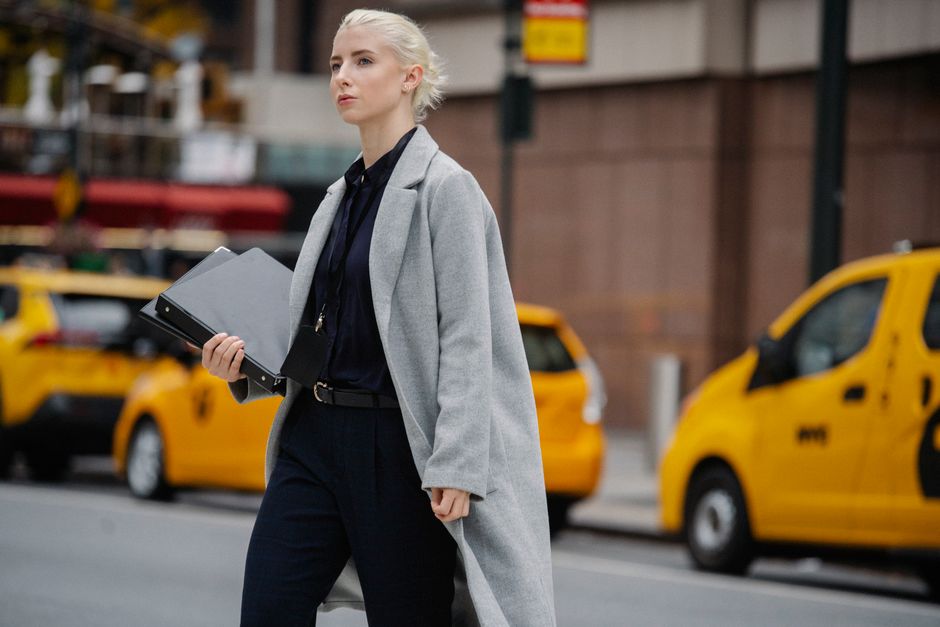
Use one fitted layer, one relaxed layer, and one structured layer. For example, a slim long-sleeve top under a straight-leg trouser and a softly tailored coat creates a clear vertical line. Three oversized pieces erase that line. The same rule applies to dresses: add a close base layer, a narrow boot, and a coat with enough room to close without pulling across the hips.
Verdict: The most polished winter outfit is not the thickest one. It is the outfit with separate jobs for insulation, structure, and weather protection.
How to build a warm office outfit from three thin layers
Start with the temperature you will face outside, then plan for the temperature you will face inside. That sounds obvious, but many office outfits solve only the commute. A layered system lets you remove one piece without leaving a shapeless shirt underneath.
Layer one: a smooth base
Choose a fitted mock neck, long-sleeve crew neck, or sleeveless thermal camisole depending on the neckline above it. Merino, silk, and fine synthetic blends work best under tailored clothing because they add warmth without adding much volume. Neutral colors are easier to repeat: black, cream, charcoal, navy, and heather gray cover most work wardrobes. Tuck the base layer into trousers or a skirt so it does not ride up when you sit.
Layer two: controlled insulation
The second layer should carry most of the warmth. A fine-gauge cardigan, merino crew neck, sweater vest, or thin quilted liner gives you options at your desk. Keep the hem either clearly cropped at the waist or long enough to reach the upper hip. A hem that ends at the widest part of the torso usually looks accidental. For dresses, a cardigan that ends above the hip creates a cleaner shape than a long cardigan worn over a loose skirt.
Layer three: visible structure
Finish with a blazer, chore jacket, fine wool overshirt, or clean coat. The shoulder seam should sit near the edge of your shoulder, and you should be able to cross your arms without the back pulling. Leave enough room for the middle layer, but do not size up so far that the sleeve covers half your hand.
Best formula: fitted base, medium-weight insulation, structured top layer. That combination handles a cold walk, a warm conference room, and a long afternoon without requiring a full outfit change.
Which winter work outfit formula works best for your commute?
The right outfit changes with the amount of time spent outdoors. A five-minute walk from a parking garage does not justify the same layers as a 45-minute train commute. The table below gives each situation a clear starting point.
| Commute | Base layer | Middle layer | Outer layer | Best footwear |
|---|---|---|---|---|
| Parking garage to desk | Fine merino crew | Blazer or sweater vest | Midweight wool coat | Leather loafer with wool sock |
| 20-minute city walk | UNIQLO HEATTECH Extra Warm Cotton Crew Neck, about $29.90 | Fine knit or cardigan | Everlane Italian Wool Cocoon Coat, often around $298 | Weather-resistant Chelsea boot |
| Train or bus commute | Merino mock neck | Thin quilted liner or wool cardigan | Long wool coat with a high collar | Blundstone 585 Classic Chelsea, about $220 |
| Snow or heavy rain | Moisture-wicking long sleeve | Warm knit with room to move | Water-resistant shell over insulation | Rubber-soled waterproof boot |
Why the middle layer decides the result
The coat gets attention, but the middle layer controls comfort indoors. A fine sweater or cardigan can stay on during a meeting without making the outfit look like outdoor gear. A thick puffer liner often looks too casual under office tailoring and becomes uncomfortable once the heating starts.
Bottom Line
For a normal city commute, the strongest combination is a thin thermal base, fine knit, long wool coat, and weather-resistant boot. The UNIQLO base layer offers the lowest-cost warmth upgrade, while the Everlane coat provides the cleanest office silhouette in this group. Choose the Blundstone only if you need a boot that can handle real pavement and wet weather; it is less formal than a sleek leather ankle boot.
Five winter dressing mistakes that make office clothes look cheaper
- Using one enormous sweater as the whole warmth strategy. A thick knit often creates a round torso and leaves the neck, wrists, and ankles exposed. Two lighter layers distribute warmth better and look easier to tailor.
- Wearing indoor shoes outside. Smooth leather loafers can become slippery, stained, and visibly damaged after one wet commute. Keep office shoes at work or choose a shoe with a rubber sole and enough grip for your route.
- Ignoring sock height. A gap between trouser hem and boot can expose skin when you sit or climb stairs. Wear crew or knee-high wool socks that stay up. They add more practical warmth than another thick scarf.
- Buying a coat for a thin shirt only. This mistake shows up when the buttons pull over a sweater or the sleeves become tight. Bring the actual middle layer when trying on the coat. A coat should close comfortably with two fingers of room at the chest.
- Mixing too many winter textures. Bouclé, cable knit, faux fur, quilting, suede, and heavy ribbing in one outfit create visual noise. Keep one texture prominent and let the rest stay quiet. A smooth wool coat over a ribbed knit looks deliberate; a textured coat over a cable sweater can look crowded.
The common thread is poor planning. Each item may be attractive alone, but the outfit fails when the layers compete for space or serve the wrong purpose. Start with the commute, then build toward the office. That order prevents most expensive corrections.
Verdict: Fix the fit and footwear before buying another statement sweater. Those changes improve warmth, comfort, and appearance at the same time.
The clearest winter work outfit formula for 2026
Start with a fitted base layer in merino, silk, or a smooth technical blend. Add one fine knit or cardigan for warmth. Finish with a mid-thigh coat that closes over the full outfit. Choose trousers or a skirt with enough room to sit comfortably, then use wool socks and weather-ready shoes to protect the parts people often forget.
Use a simple budget check before buying
Do not evaluate a coat by its sticker price alone. Divide the cost by the number of workdays you expect to wear it in a season. A $300 coat worn 60 times costs $5 per wear before maintenance. A $90 sweater worn three times because it pills, rides up, or cannot fit under the coat costs more than it first appears.
Choose one clear priority
If you walk more than 15 minutes, spend your attention on insulation and traction. If you move from car to office, spend it on fit and a clean coat line. If your workplace is formal, prioritize wool structure and polished boots. If your office runs hot, prioritize a removable cardigan over a heavy knit. The best answer is not the garment with the most technical claims. It is the outfit that performs through the entire day.
That brings the cold morning back to the opening problem. The sidewalk may still be freezing, and the office may still be too warm, but a thin base, controlled middle layer, structured coat, and sensible boot give each temperature a separate solution. You arrive warm, remove one layer, and keep the polished outfit underneath.